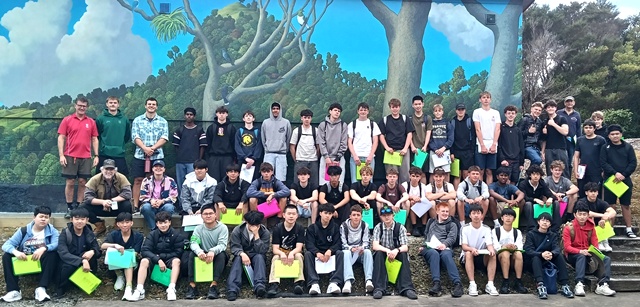
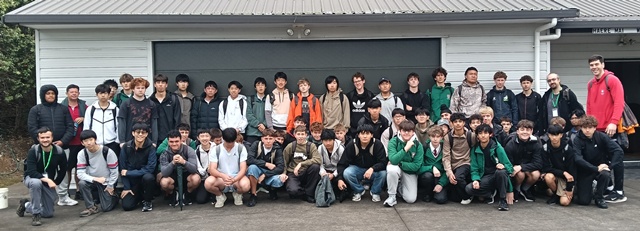
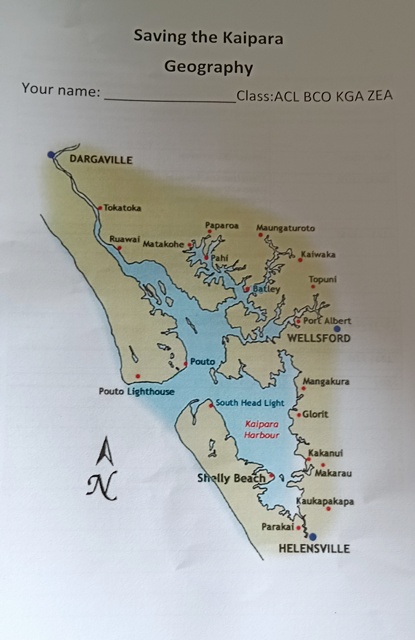
An important focus at CUE Haven is education and we were very happy to once again host this year’s Year 11 geography students from Westlake Boys High School. The students were conducting field work in connection with their study about how human activity affects water quality in the Kaipara Harbour. The field trip included a trip to CUE Haven, a visit to a local stream to do water quality testing and boat tour on the Kaipara.
This year for the field trip, the class was broken into two groups—one came on the 14th and the other on the 15th.
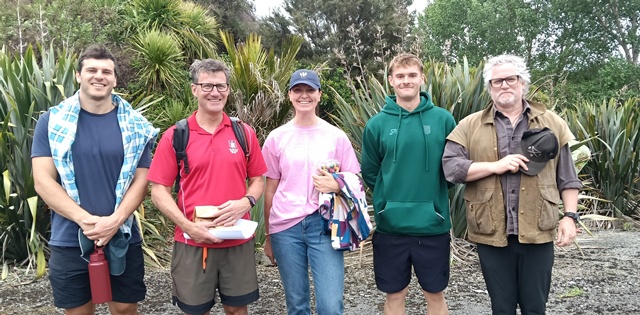
The group on the 15th was accompanied by teachers Andrew, Dillon, Jonno, Kate and Oscar.
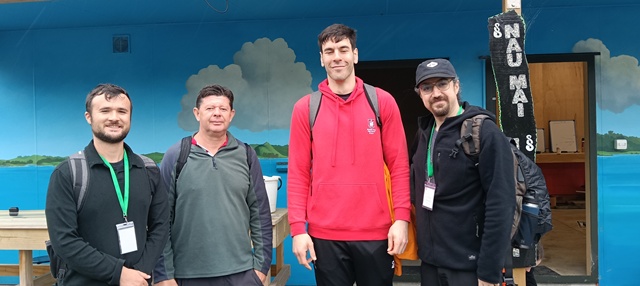
Mahrukh started each session with a welcome and some background information on the CUE Haven restoration project.
The students’ assignment is to learn about how human activity impacts the Kaipara Harbour and specifically, the causes and effects of sedimentation, how it can be mitigated and the social and economic tradeoffs of alternative courses of action.
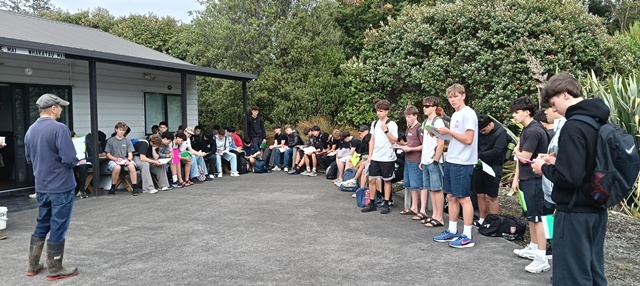
Thomas gave a short safety briefing before taking each group for a short walk around CUE Haven.
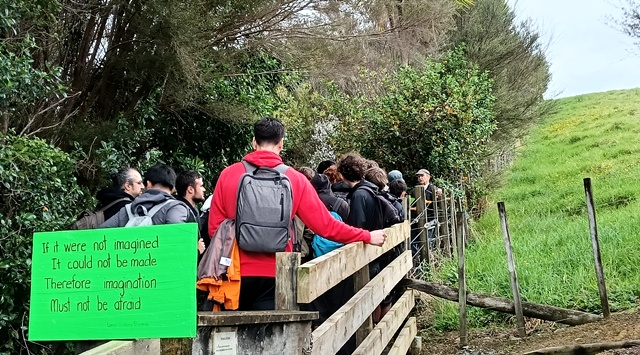
On the walk, Thomas explained how different activities (e.g., farming, forestry, urban development) impact sedimentation and also discussed remediation and tradeoffs.
The students saw some of the oldest and newest plantings and were able to compare them to the neighbours’ paddocks which are still being grazed.
Thomas explained that different types of land use alter the way water behaves, mainly by affecting the direction and speed of flow. He pointed out that removing the forest canopy increases the peak flow of water and how the heavy water flowing downhill from the open paddocks on the neighbouring property had contributed to a big land slip at CUE Haven during the January 2023 rain storm.
The students got to see some specific examples of how the restoration of CUE Haven from farm to native forest had affected the stream, wetlands, the land at CUE Haven, the farms downstream and ultimately the Kaipara Harbour.
From the middle of the property, the students could see the Kaipara Harbour. They were able to see how Wai Matauranga, the CUE Haven stream, feeds the Araparera River and in turn the Harbour. They were also able to see a variety of land uses—farming, forestry, restoration and residential adjoining CUE Haven to put the different things they had heard and seen into perspective.
Once back down from the walk, the students had the opportunity to ask any questions about what they had heard and seen during the visit.
On the 15th, in addition to the walk, CUE Haven also hosted the water quality testing session because the usual venue did not provide shelter from the wind and showers that morning. Janey and Sophie from the Mountains to Sea Conservation Trust led the session. They arrived early and collected water samples for analysis from various locations in the CUE Haven stream and wetlands.
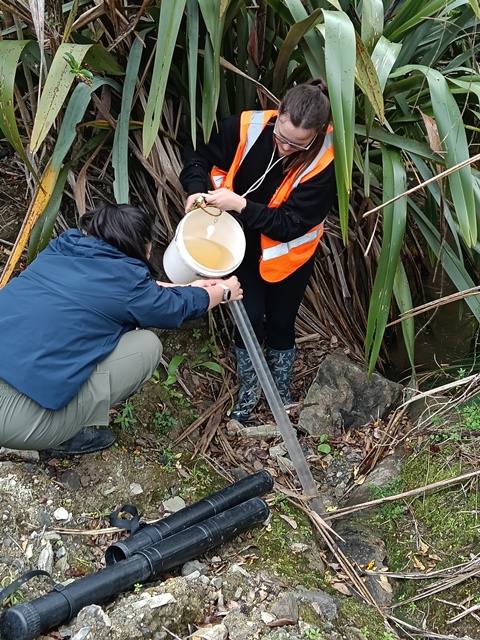
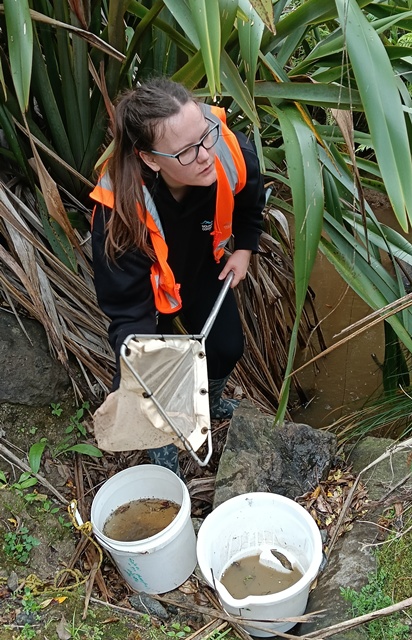
The samples would be used for a variety of water quality tests as well as to find any macroinvertebrates living in the leaf litter and stream.
When the students completed their walk, Janey gave a short discussion on the Kaipara Harbour and water quality issues.
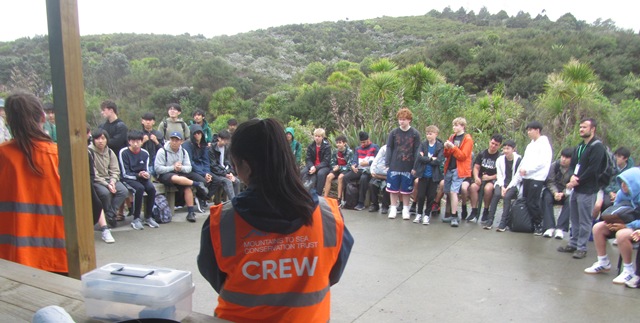
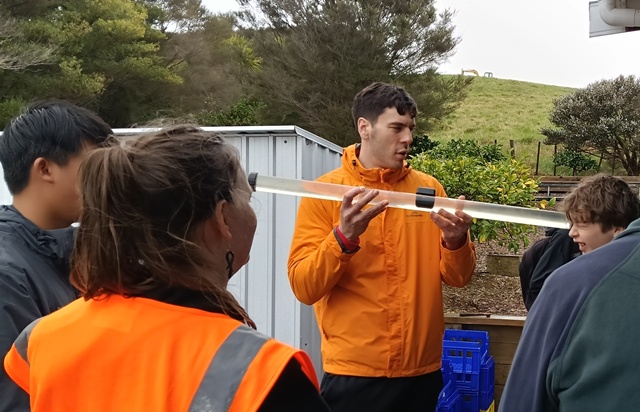
She then explained the various testing procedures the students would be doing and how to record results.
The first test was to study water clarity. Clarity is an important measure of how much sediment is suspended in the water. Too much sediment is bad for the animals living in the wetlands and harbour. Testing involves filling a clear tube with water and then determining how far light penetrates by moving a magnet through the tube. Because there is some subjectivity to the test, several students took readings, recorded them and averaged the result.
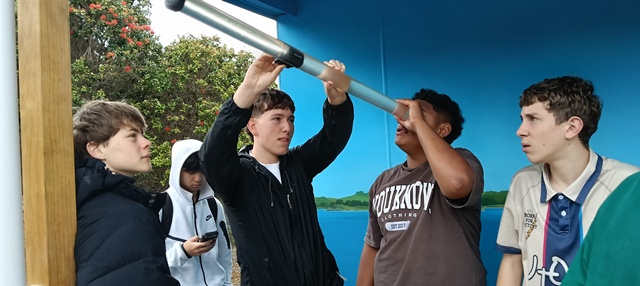
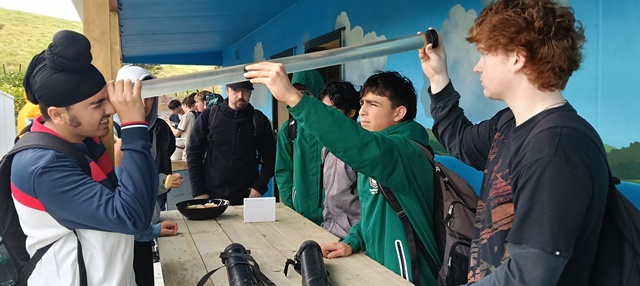
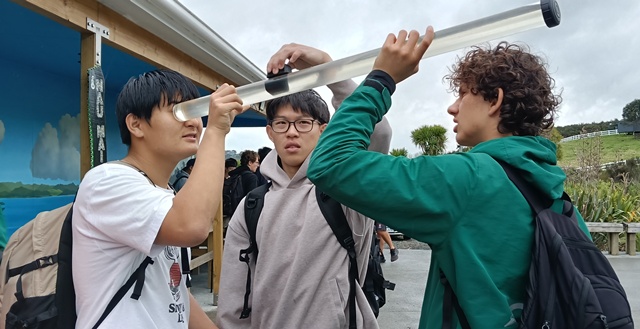
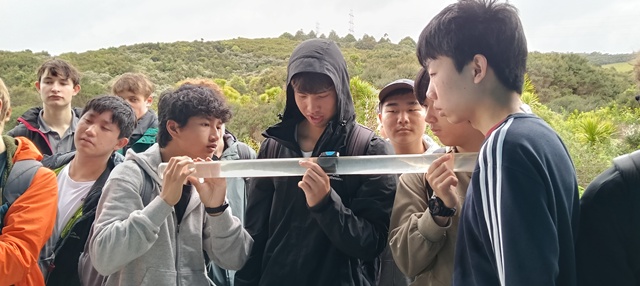
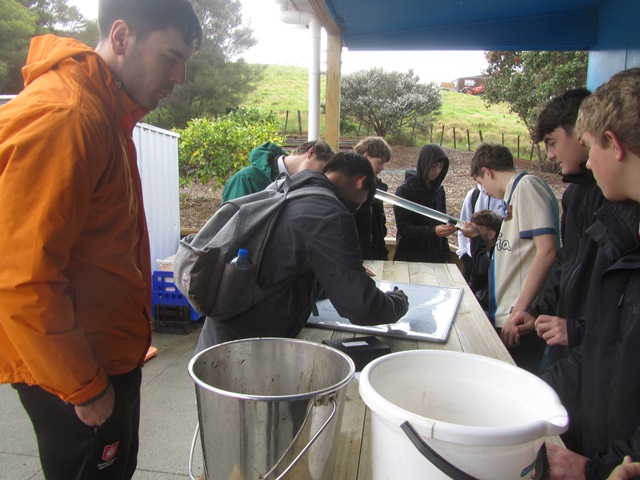
The students also conducted tests on water temperature, dissolved oxygen and pH.
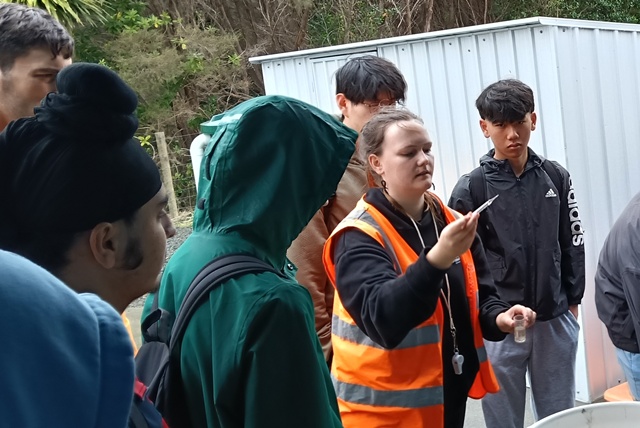
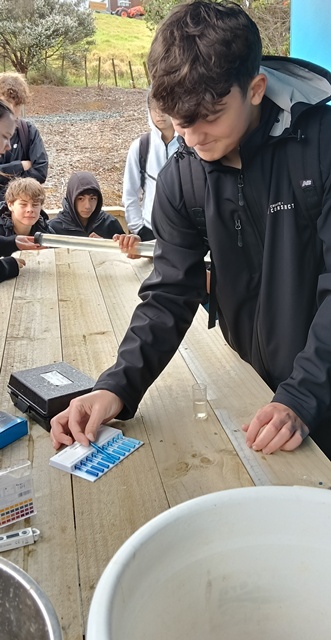
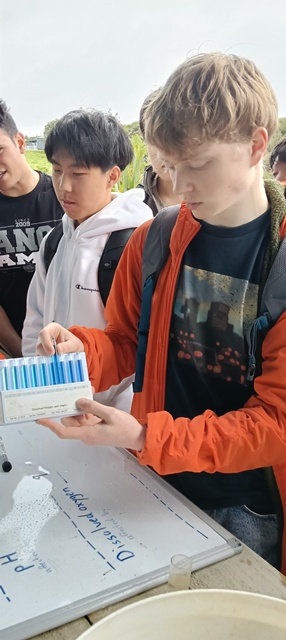
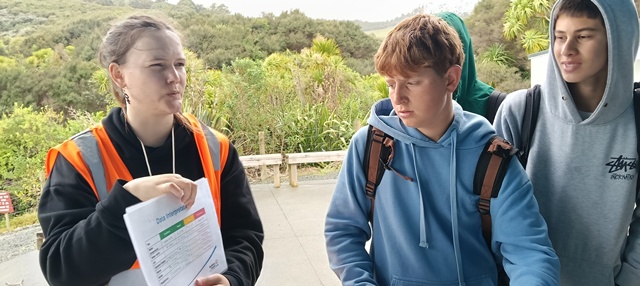
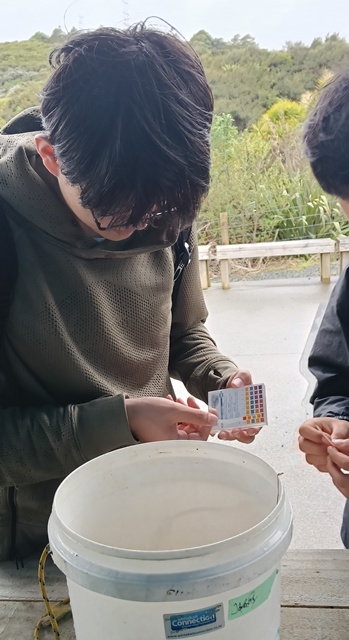
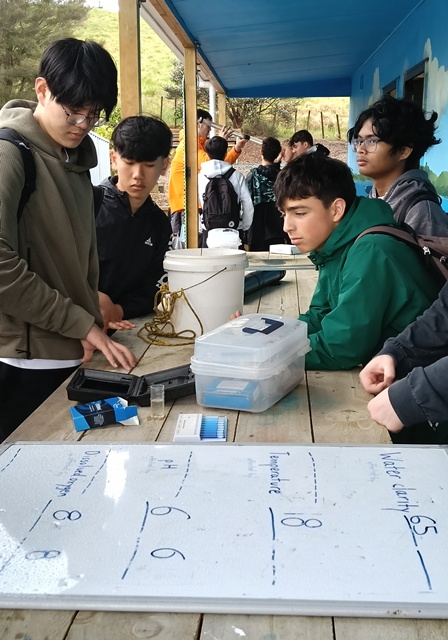
The next phase of the work involved studying the water samples to find macroinvertebrates, which are tiny creatures living in the ponds and streams. Sophie set out trays with charts to identify the creatures the students found. The charts indicate the sensitivity of the animal to water quality.
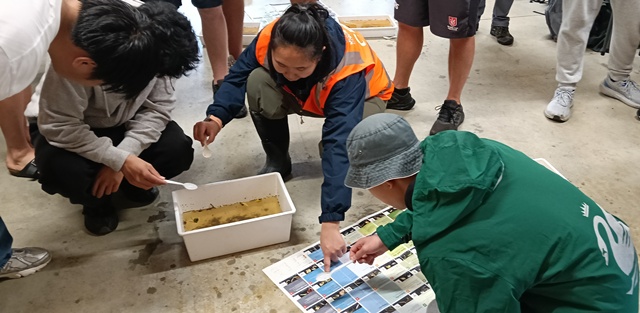
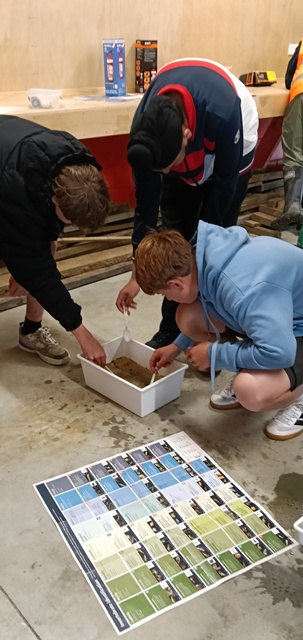
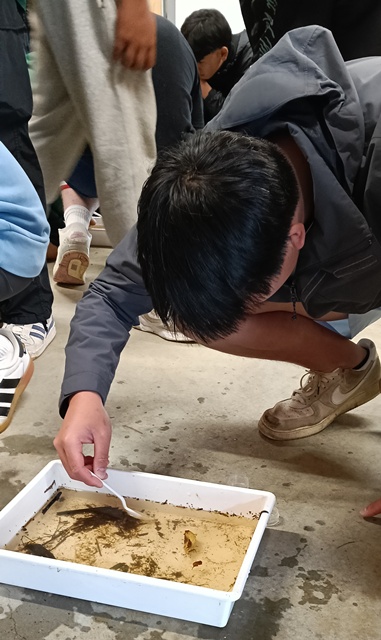
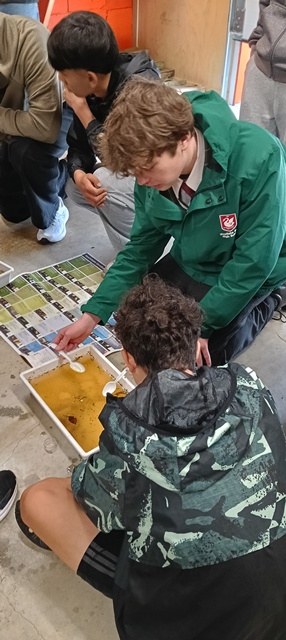
Sophie showed the students how to use the microscopes they had brought to further study the macroinvertebrates.
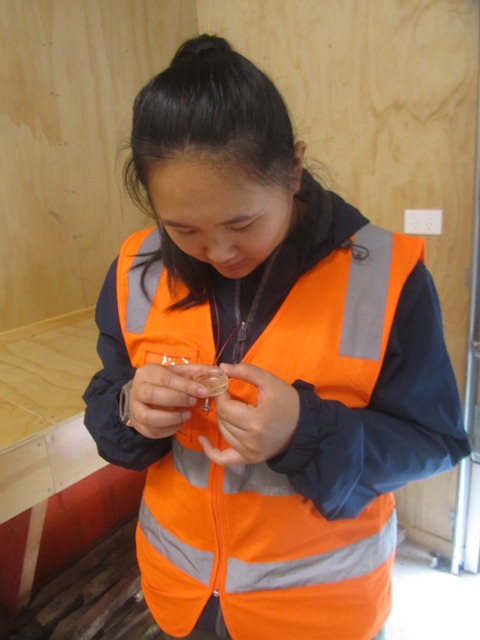
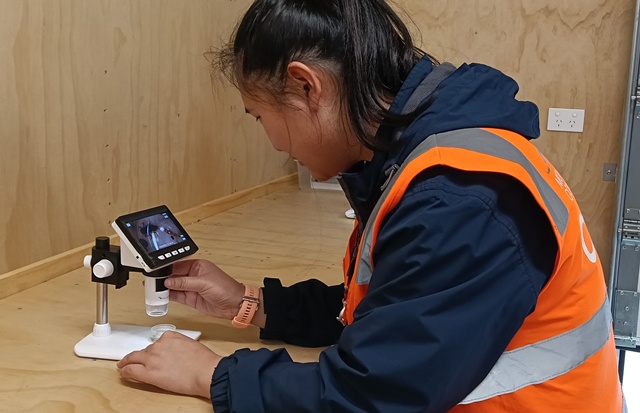
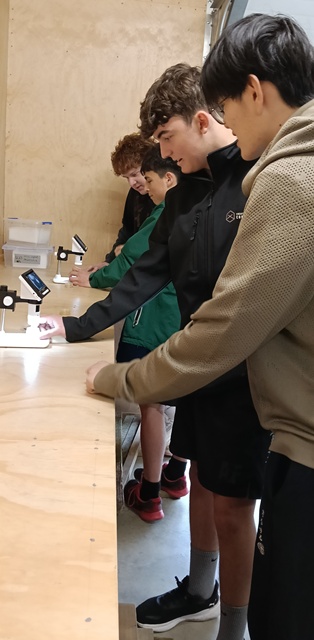
It was really good to find a mayfly which is usually only found in very clean water systems.
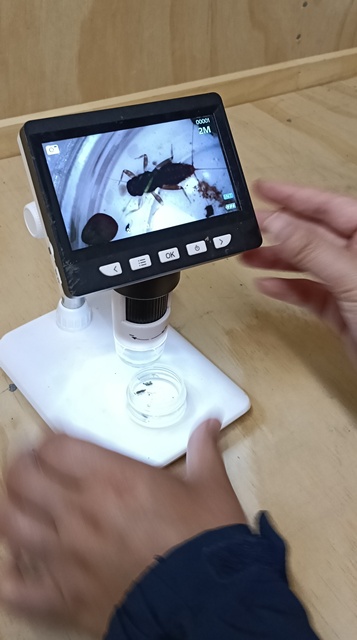
Another nice surprise was also finding a baby eel.
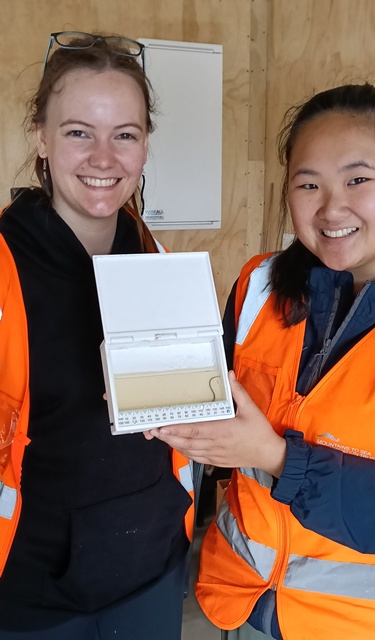
The students got a chance to have a good look at it.
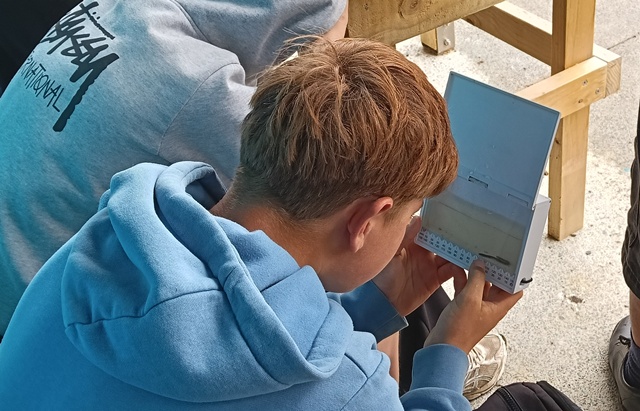
Janey recorded all the students’ findings and summarized the data. We were very happy to see that all the tests showed excellent water quality results for the CUE Haven waterways.
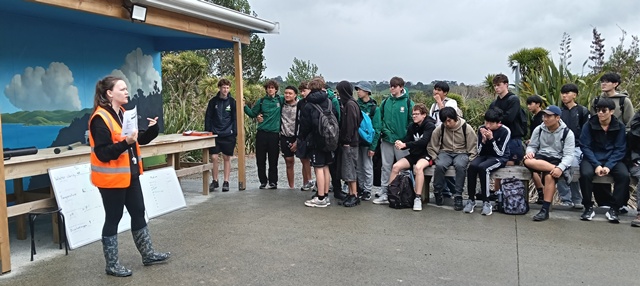
We enjoyed hosting the students and sharing information about the restoration of CUE Haven and its positive effects on the water quality of the Kaipara Harbour. We want to thank Andrew for arranging the sessions and a big thank you to all the teachers for their assistance.
And a big thank you to Janey and Sophie and the Mountains to Sea Conservation Trust. We hope you will continue to conduct water quality sessions at CUE Haven.
Lastly, many thanks to the students for their time and attention and we hope you found the visit helpful. We wish you all the best with your assignment and further studies. We hope you will come back to CUE Haven for a leisurely visit to explore and enjoy more of your community native forest reserve.