
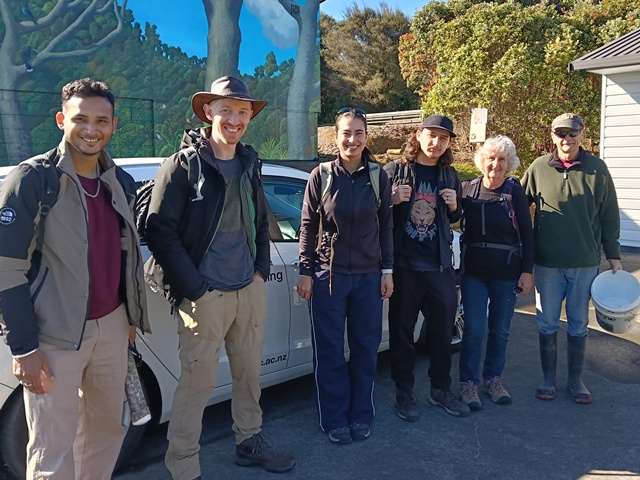
Today Unitec lecturer Ryan deRegnier brought his third year Bachelor of Applied Sciences students doing a paper in restoration ecology to CUE Haven for a field trip.
The objective of the visit was for the students to see a restoration project in process and learn more about the issues and challenges involved.

The group arrived shortly after lunch and Mahrukh gave a brief introduction to CUE Haven and the history and objectives of the restoration project.
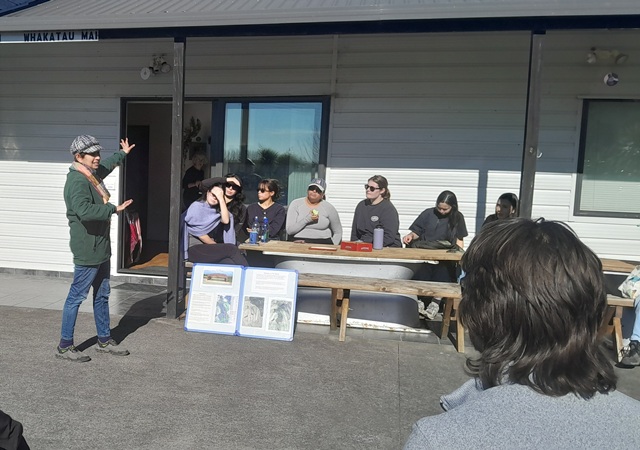
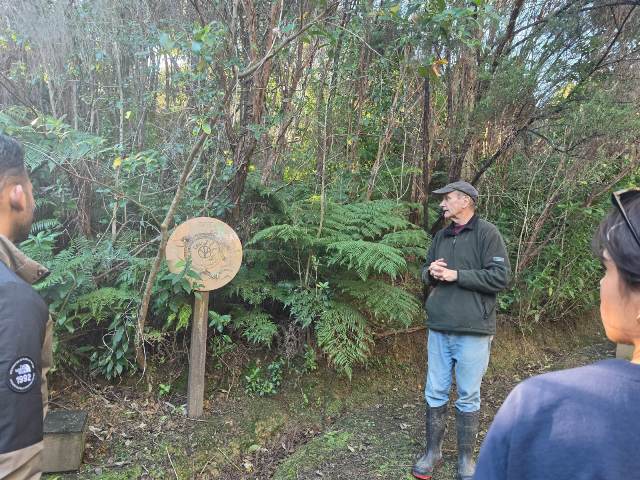
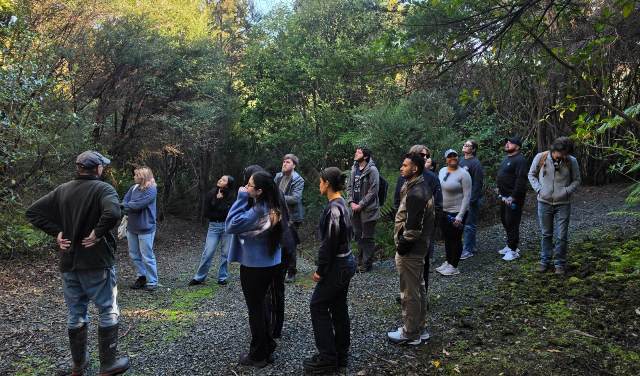
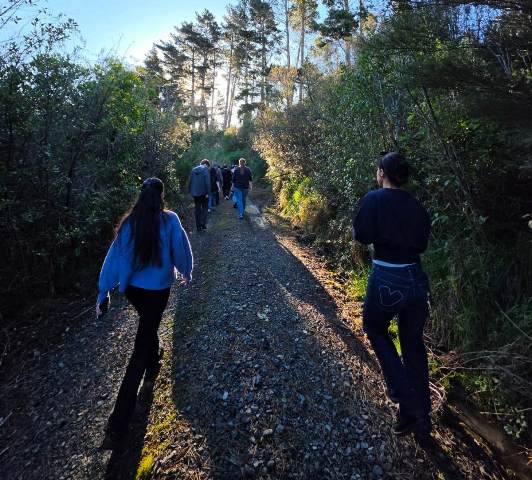
Thomas then took the students for a walking tour around the CUE Haven reserve to give them a first hand look at the results of the restoration work which began in 2008 to convert the farm into a thriving native forest. After a safety briefing, we headed out for the walk.
Along the way, Thomas pointed out different aspects of the regenerating bush and explained the methodology and challenges of the restoration project.
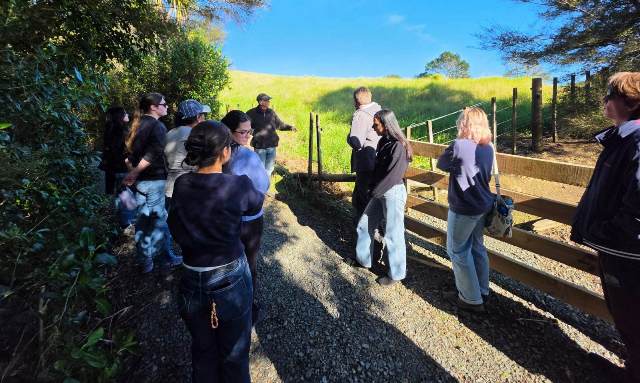
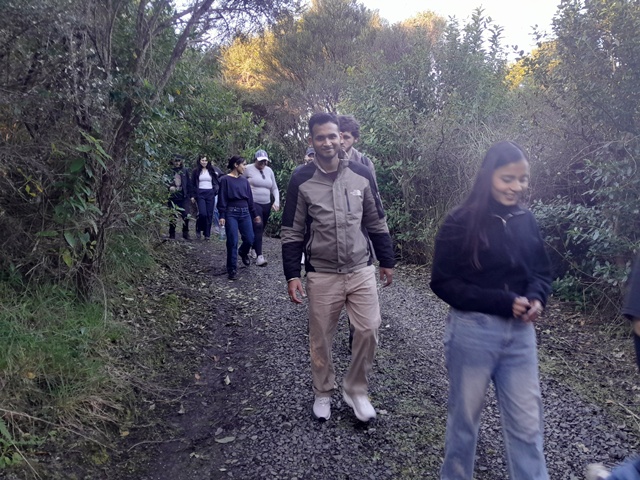
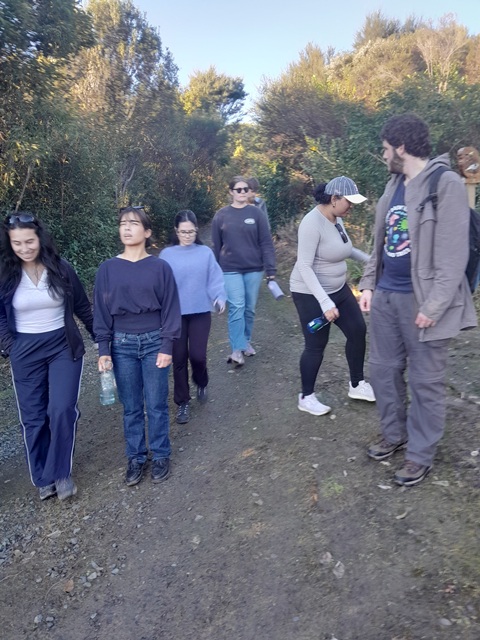
We made regular stops throughout the walk and the students were able to take a closer look at things and ask questions.
When we returned, students had an opportunity to ask additional questions and discuss what they had seen and heard on the walk.
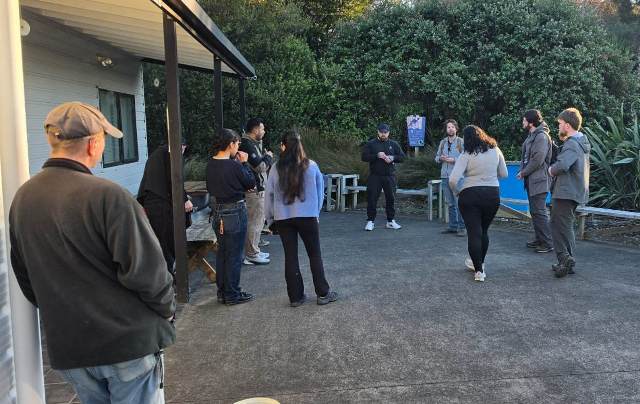
As always, we had a very enjoyable visit with the Unitec students. We learn a lot from these visits and are always impressed with the enthusiasm and varied interests and knowledge of the students and staff. Our thanks to Ryan for organising the visit and look forward to future visits.
And a big thank you to the students for their enthusiasm and interest in the project. We wish you all the very best with your studies and your future endeavours. And look forward to having you all out to CUE Haven for a leisurely visit soon.
–ooo–
Earlier in the day, Unitec lecturer, Wesley Webb who is doing some specialized research on native birds, came out with ecology students, Sharnar, Tushar and Tyson to install a variety of field research equipment at CUE Haven. Our good friend and avid bird enthusiast, Joy, also joined us to help out.
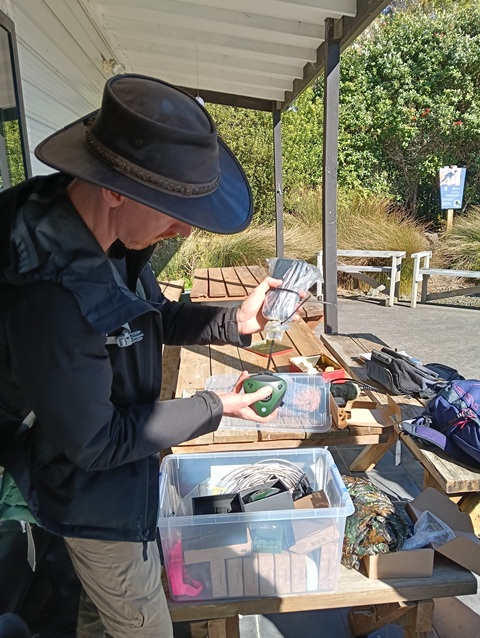
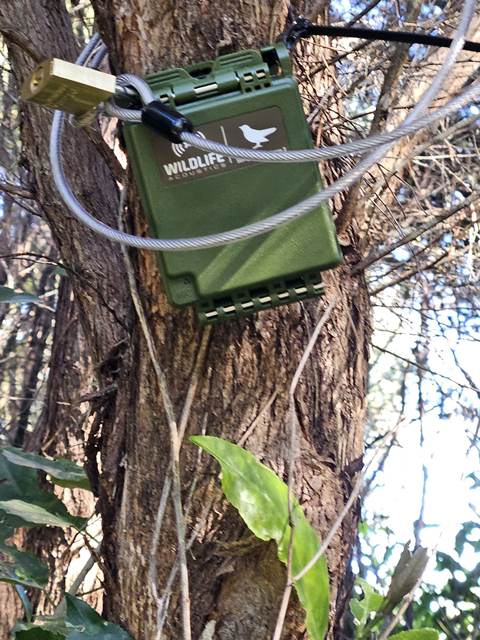
The equipment included a bat monitor, acoustic monitors for recording bird calls, Birdweather devices which capture additional information and have AI capabilities to identify the calls, and a thermal imaging camera which detects all living animals from their heat signature.
Wesley explained each piece of equipment and described how it should be installed in the field.
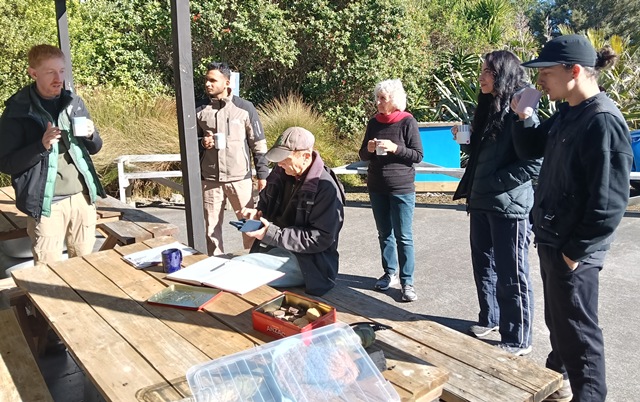
Using a map of the CUE Haven property, Thomas and Wesley planned where each item would be installed and determined an efficient route.
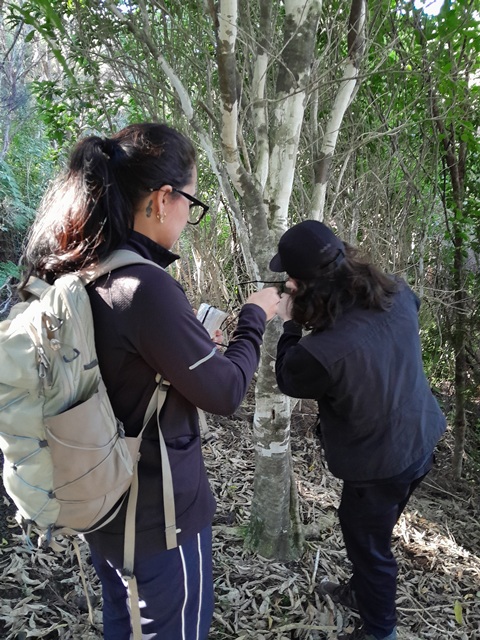
We then headed out to the field and began installing the devices. Wesley demonstrated the optimal way to orient and attach each device. The GPS coordinates of each device were recorded to facilitate retrieving the devices.
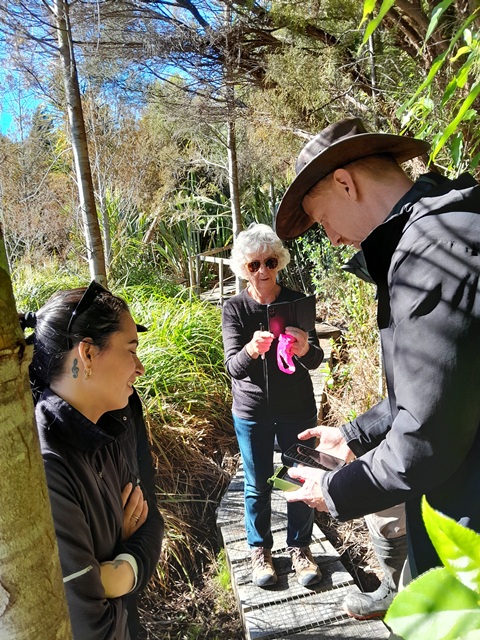
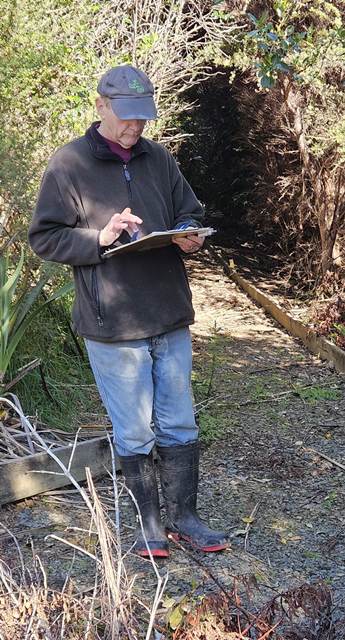
The devices were also carefully secured.
Once Wesley had demonstrated the procedure, the students took over the installations.
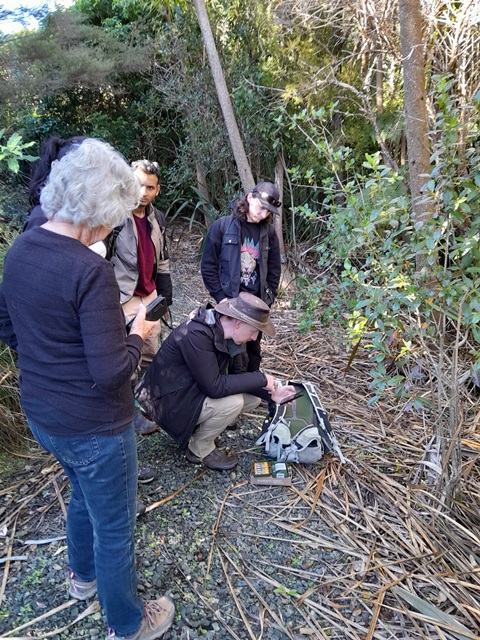
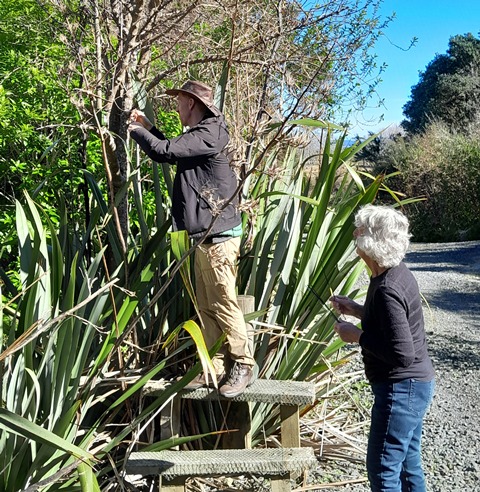
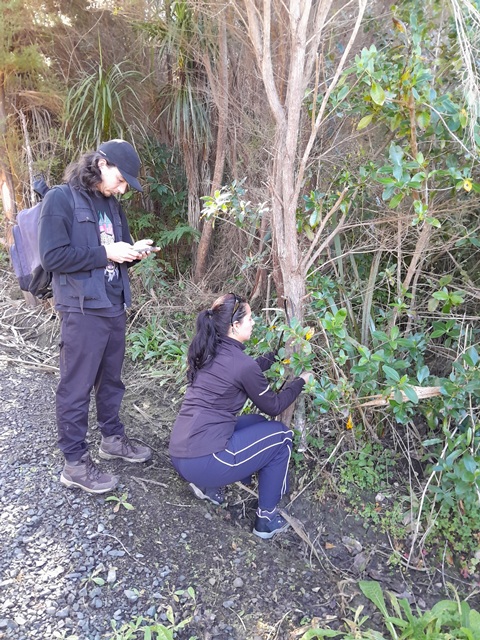
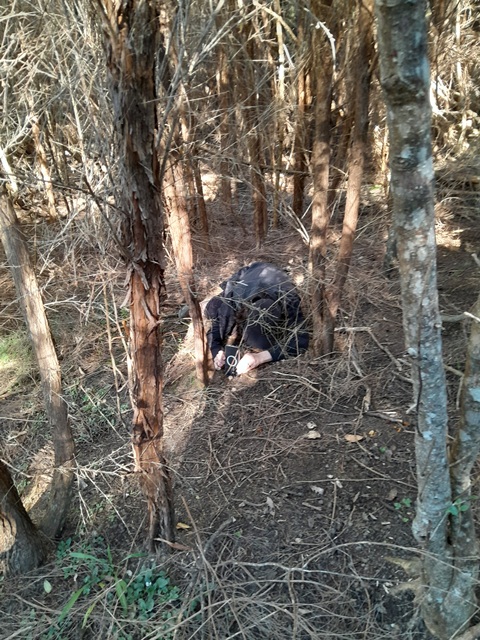
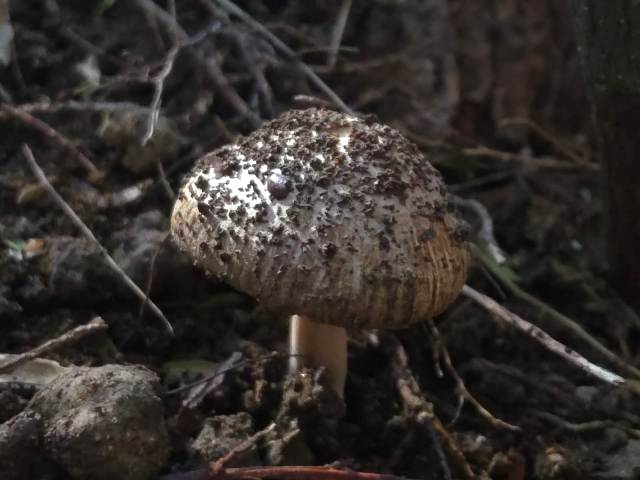
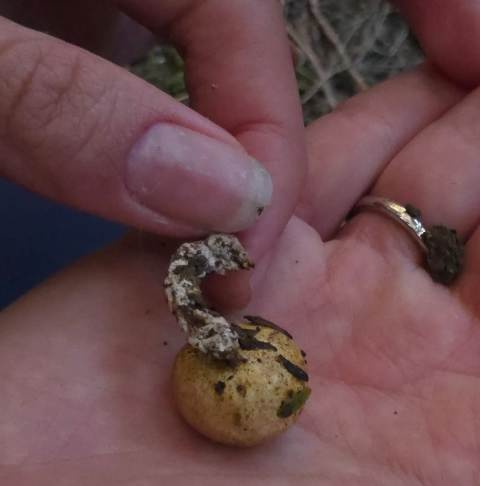
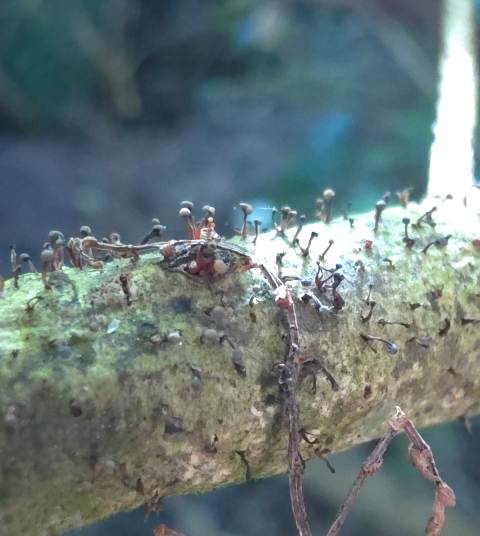
Sharmar and Tyson are interested in fungi research and photographed some specimens.
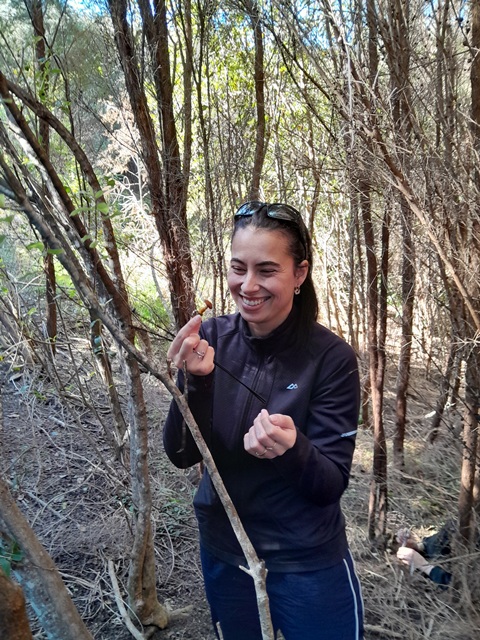
It took a bit of creativity and effort to prepare some of the monitoring devices to make sure they remain secure and waterproof for deployment.
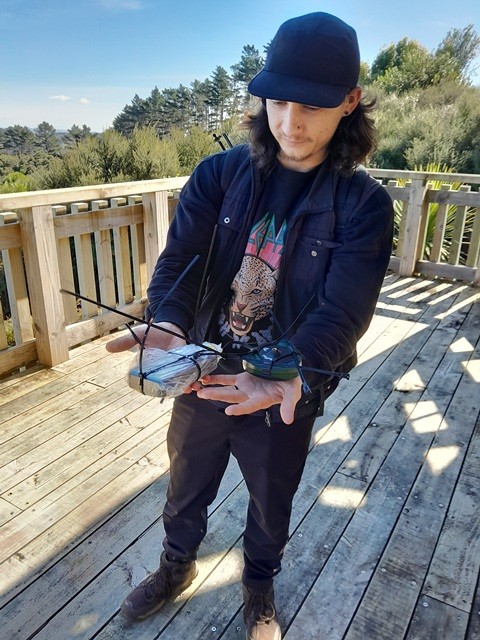
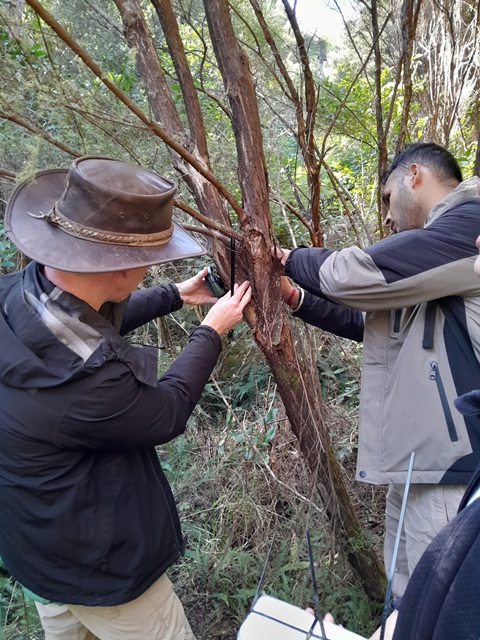
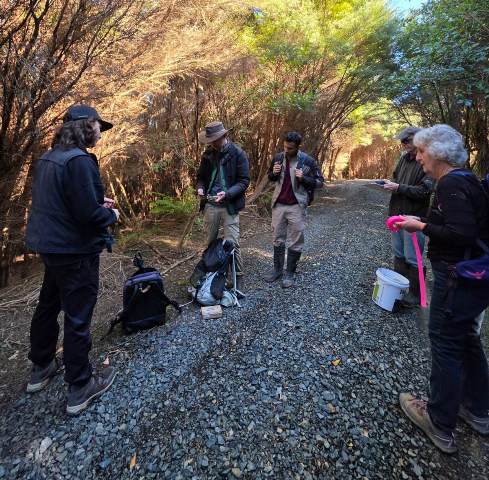
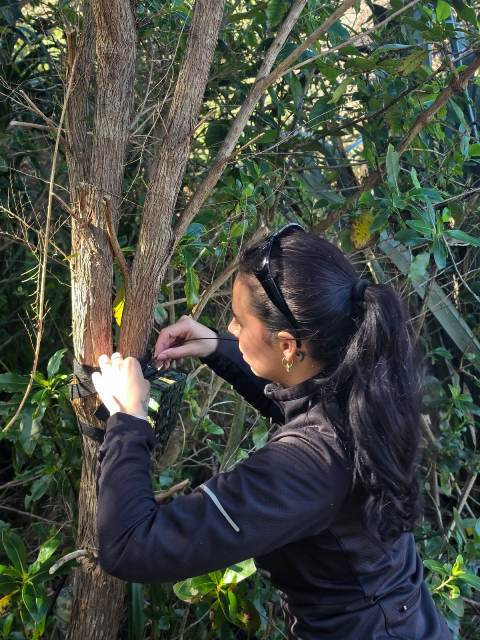
These monitors will give us a better idea about the variety and populations of native birds that have been coming back to the developing reserve. We have wanted to find out if we have bats at CUE Haven for a long time and the bat monitor will give us critical information. The thermal camera will not only tell us about bird life, but will also be a great addition to our pest control work because it will let us know what pests are moving through the bush.
We are very grateful to Wesley for his continued interest and support and using the CUE Haven reserve for his research project.
Many thanks to Wesley, Sharnar, Tushar and Tyson for their help today.
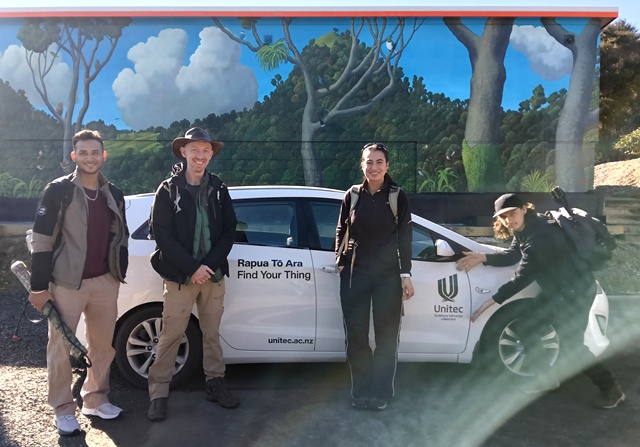
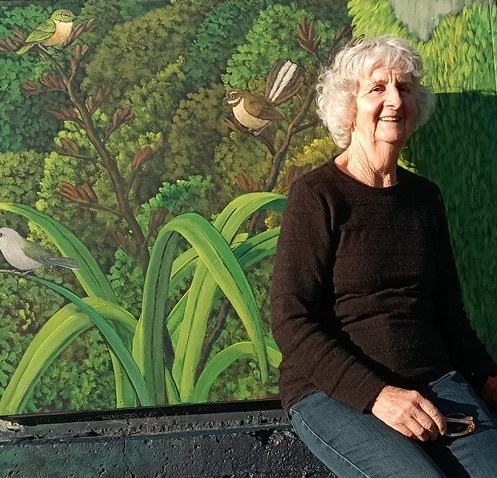
And dear Joy, a big thank you for helping out and for your much valued insights and suggestions.
Thank You!! Thank You!!


