
Today we were delighted to welcome 58 students from Woodhill School and Kaukapakapa School to CUE Haven to explore a bit of the CUE Haven ngahere and learn a bit about being good kaitiaki.
The 58 students from Year 4 to 8 were accompanied by 10 adults -Woodhill School Principal Dawn Fern, Deputy Principal, Rewana Waaka, and other teachers, parents and caregivers.
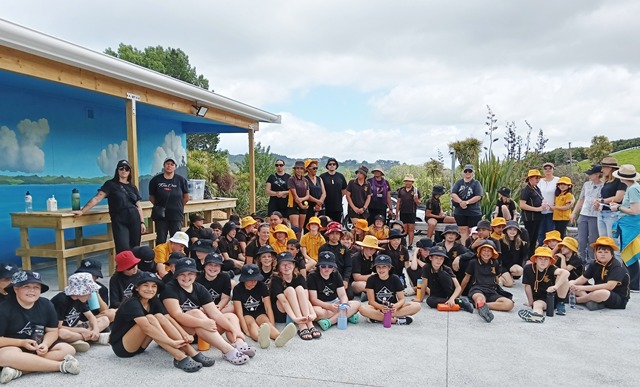
Mahrukh welcomed the students and gave a brief background of the CUE Haven project. She advised the students about the activities for the day, and then Thomas gave a safety briefing.
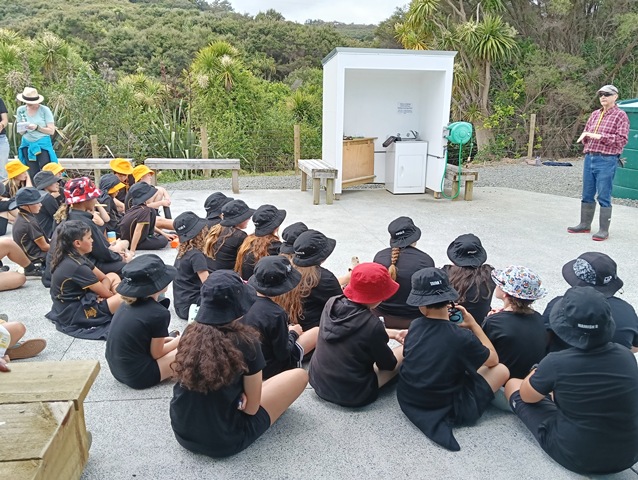
Principal Dawn then broke the students into two groups—each group would alternatively do both activities.

Nature Walk
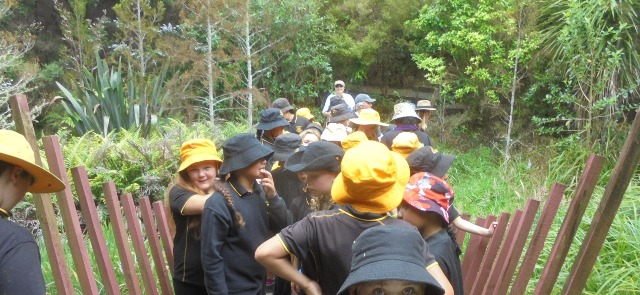
For one activity, Thomas took each group for a walk in the bush.
During the walk, Thomas pointed out some of the different planting areas to show the students how the CUE Haven forest was establishing.
As we continued our walk through the bush, the students got a chance to see many different native trees.
At Wahi Maturanga Thomas gave a brief talk about pest control. He explained the different introduced pests that threaten native New Zealand plants and animals and described pest control activities at CUE Haven.
He explained how tracking tunnels are used to determine the types of pests present and showed the students some cards with footprints of different animals.
Thomas also showed the students the different types of traps used at CUE Haven and explained how they work.
At the end of the session, Thomas took the group back to the cottage for the next activity. The walk gave the students a chance to see more of the CUE Haven bush.
Sustainable Living
Mahrukh led the students in an interesting activity about resource depletion to help the students better appreciate how to conserve our planet’s resources.
The students broke into smaller groups with each group including at least one adult. Each group had a bowl full of small stones and an empty bowl, a pair of chopsticks, a fork, a teaspoon and a tablespoon. The students were told that they were to take turns moving the stones from one bowl to the other, the first person was to use only the tips of their little fingers, the second person would use chopsticks, the third person, the teaspoon, the next person would use the fork, the fifth the tablespoon and the last person could scoop up stones with their whole hand.
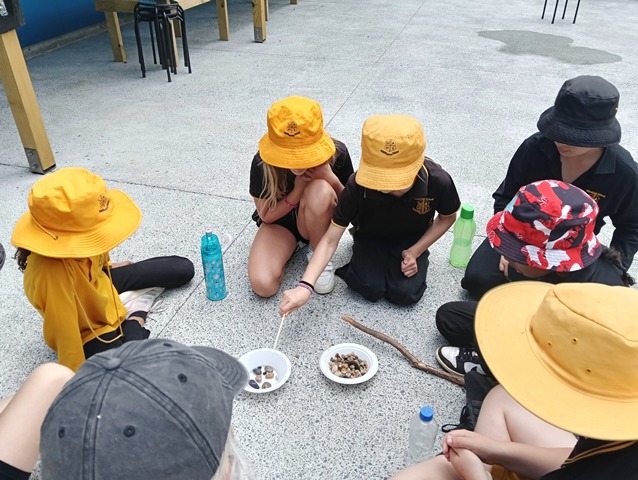
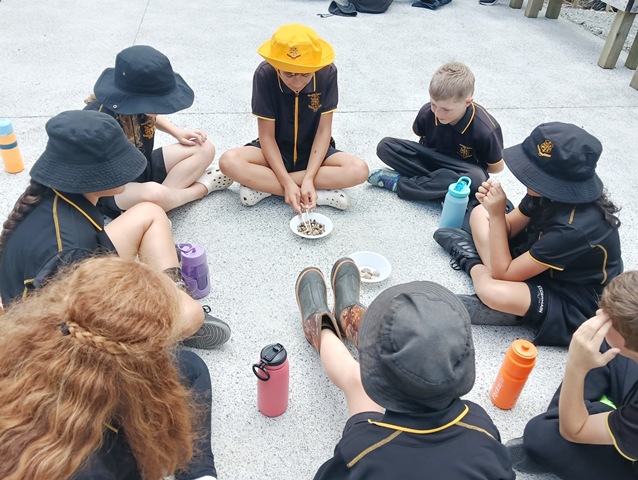
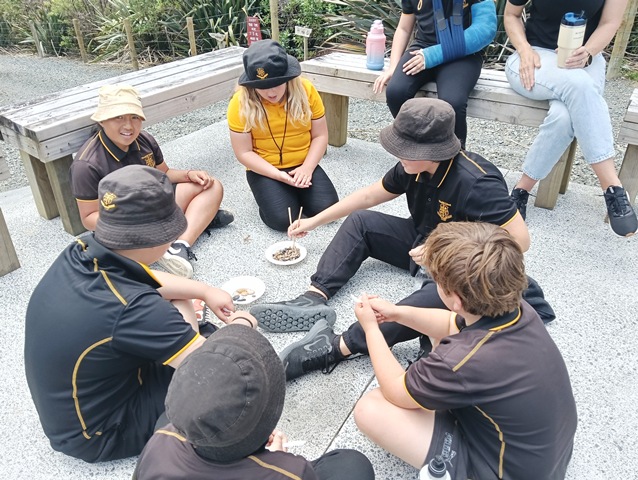
Mahrukh counted time as the students worked on moving the stones.
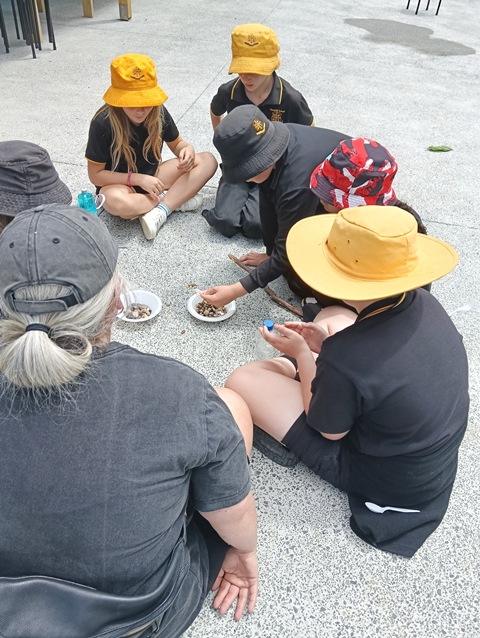
The groups finished up moving their stones and the last person in each group had no stones to remove because the others had worked hard to move the stones as quickly as they could.
Mahrukh asked the students who didn’t get a chance to move any stones to say how they felt. That generated some interesting talk about being considerate and including everyone in activities.
Mahrukh then asked the students to imagine that the stones represented the Earth’s natural resources and the chopsticks, forks and spoons represented the technical progress that has enabled humans to use resources more rapidly over the ages. She discussed how excessive use of all our natural resources would mean that there could be none left for future generations.
Although at first the students thought the activity was a game and the objective was to empty the bowls as quickly as possible, they realized the importance of what the stones represented and the risk to future generations of over consumption.
The adults in each group then led the students in a discussion about what they could do individually to reduce consumption, conserve resources and care for each other and our planet.
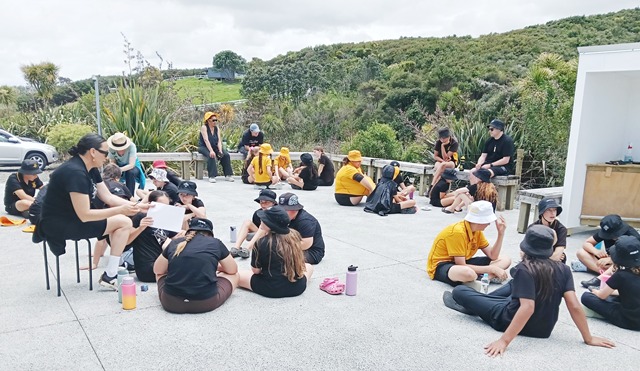
The students all had some excellent ideas. Each group recorded their ideas so that they can develop them further in school and at home.
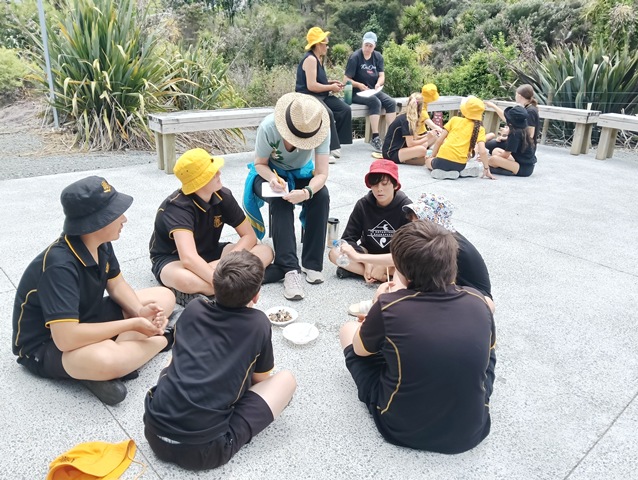
The students all had some excellent ideas. Each group recorded their ideas so that they can develop them further in school and at home.

 CUE Haven