
Deloitte is a multinational professional services firm and one of the Big 4 accounting firms. Deloitte NZ’s Good Thinking initiative provides their consultants with opportunities to volunteer their technical skillsets and contribute to the community in meaningful and impactful ways.
As part of the Good Thinking initiative, Deloitte Auckland office consulting cadets, Justyne, Lani, Melanie, Simran, Tiger and Viola proposed sponsoring an environmental education field trip for a local school.
The cost of the bus and professional educators for these trips is often outside the reach of smaller rural schools, and the Deloitte team wanted to provide students with not only a memorable experience but also a message of care and community support.
The team’s proposal was selected by a panel of judges and Parakai School in northwest Auckland was selected to have a unique environmental education day at CUE Haven.
Environmental educators Shanthie Walker and Chris Judd put together a programme for the day in conjunction with Parakai School teacher Sue Ganley.
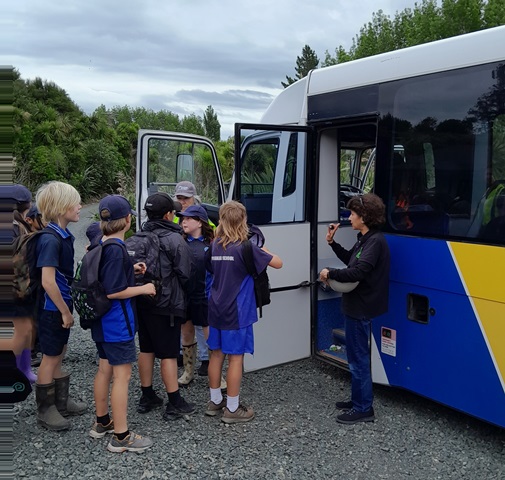
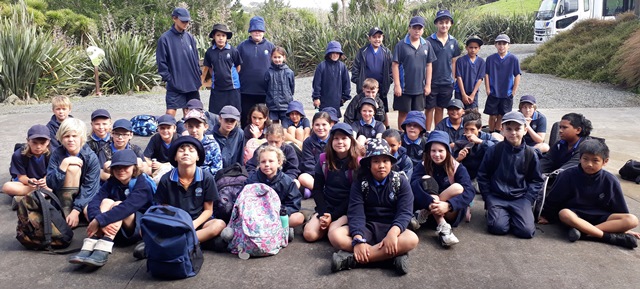
Today a great group of Year 5-6 students from Parakai School and several teachers and parents visited CUE Haven for a fun day of learning. Also joining the group were Deloitte consulting cadets Tiger and Simran.
Shanthi and Chris arrived early to set up.
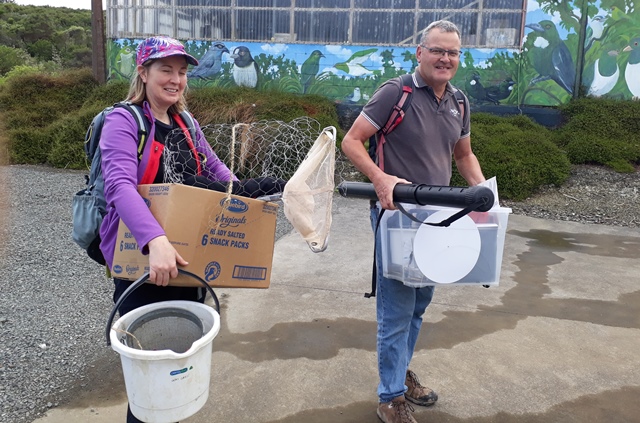
They went out to the field to set up their water testing station.

They collected water samples from the stream which the students would use to conduct their testing.

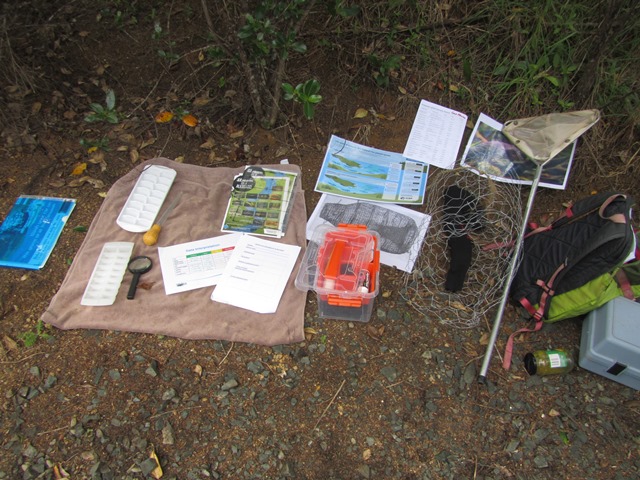
They set up all the testing materials and then headed back to welcome the students, teachers and parents.
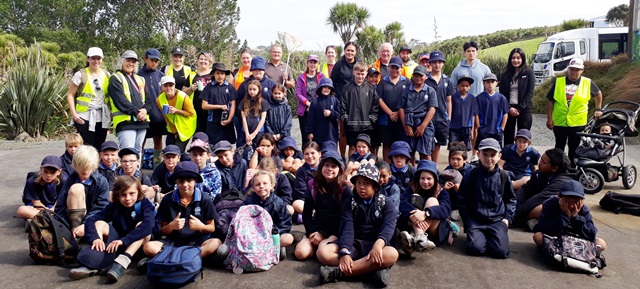
Mahrukh started the day off with a brief welcome to CUE Haven.
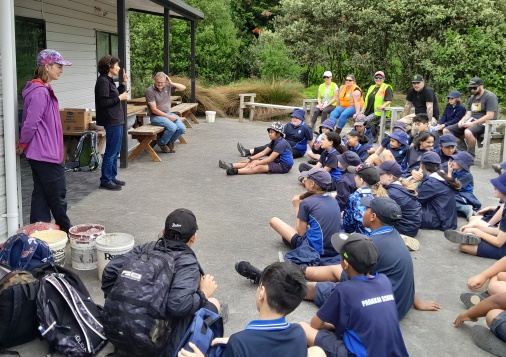
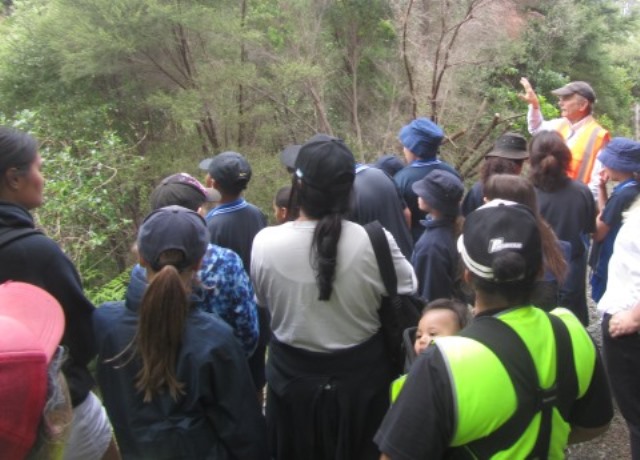
Shanthie then gave an introduction to the plan for the day. The plan was for the students to do a variety of activities that would help them learn about nature and how they can help protect it.

Thomas gave a safety briefing.
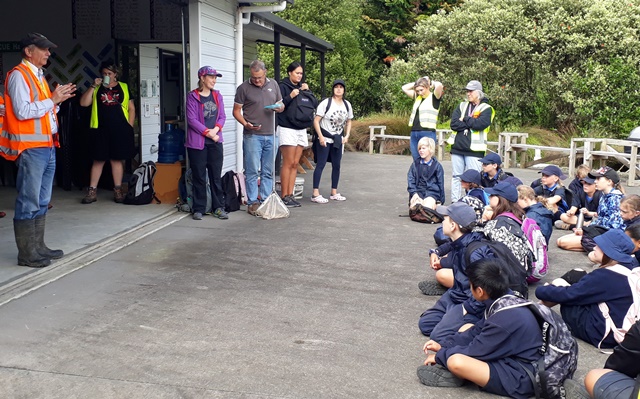
Then teacher Sue had the students break into their three groups so they could start the activities. Each group would rotate among the three activities—Waicare, nature walk and kaitiaki exercise—so that everyone would have a chance to do each activity.
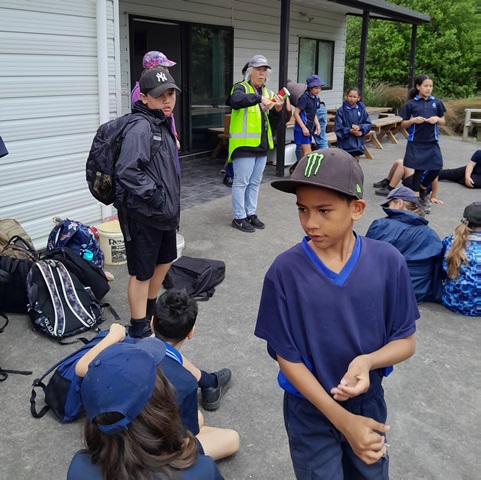
Waicare
The first activity was waicare in which the students would learn about issues affecting water quality in the CUE Haven stream and downstream in the Kaipara Harbour. The students walked out to Piriti Nui where Chris and Shanthie had set up the work station.
Chris gave a brief discussion about the importance of protecting waterways and issues affecting water quality and how land use in and around CUE Haven affected the CUE Haven stream.
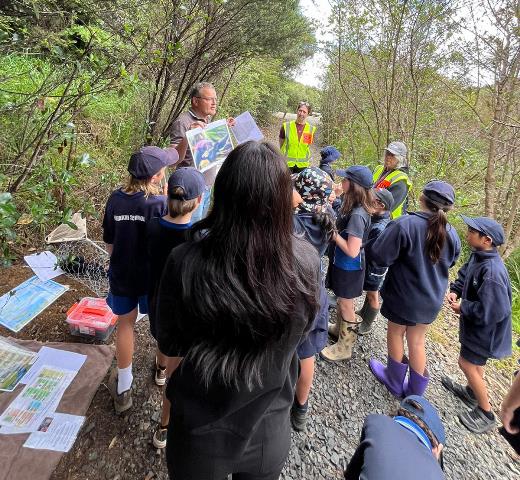
He explained to the students that they would be testing clarity of the water to assess silt levels, testing water temperature, oxygen, phosphates, nitrates and pH levels and examining water samples to identify macroinvertebrates—the tiny animals that live in streams. The amount and diversity of animal life is an indicator of the health of the waterway.
Water clarity testing involved looking through a tube filled with stream water and measuring the distance light can penetrate to see how much silt and other material is suspended in the water. Many aquatic creatures cannot thrive in cloudy water.
The clarity test tube was filled with water from the stream and Chris demonstrated how to do the test.
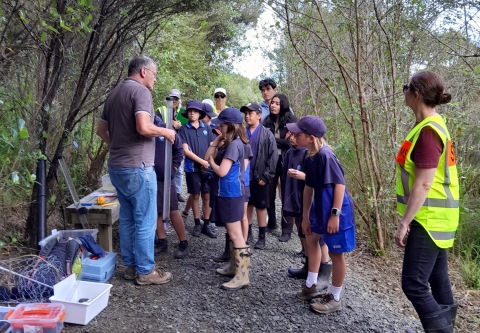
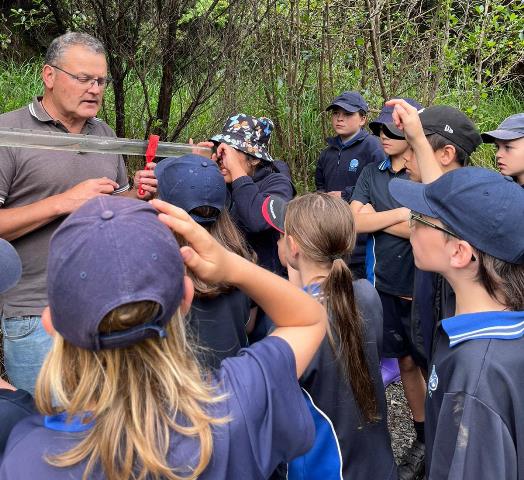
The students then teamed up to conduct several tests and the results of the individual tests were averaged.
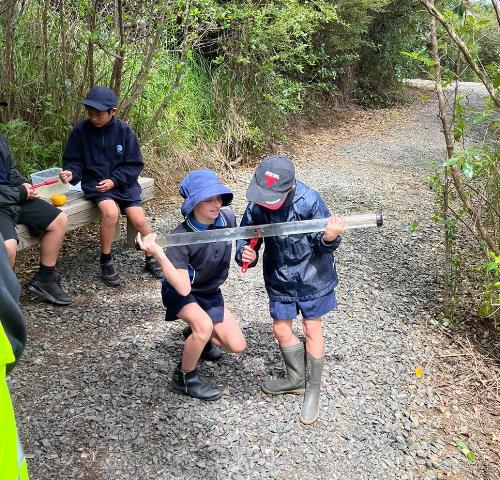
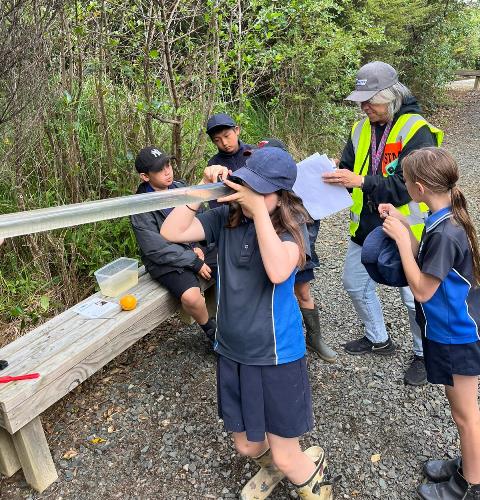


The students also did tests to check the water temperature, oxygen levels and pH levels and Chris discussed what the results meant. The results all indicated that the water quality in the stream at CUE Haven is very good.

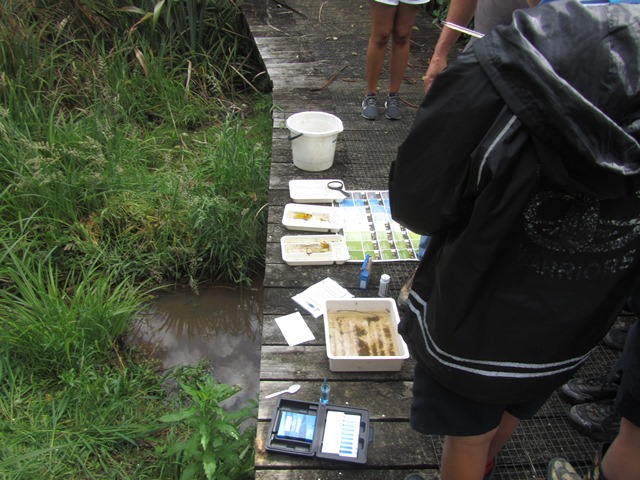
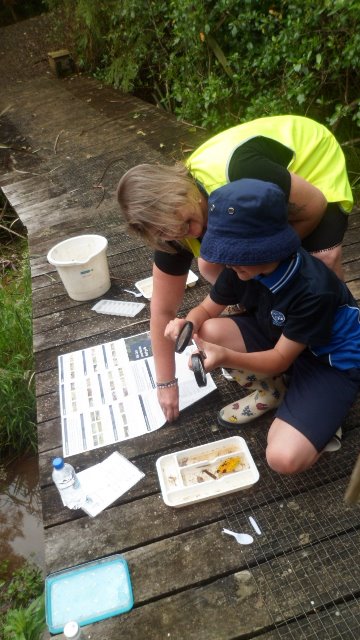
Chris had filled trays with stream water and he showed the students how to examine the sample and identify macroinvertebrates.
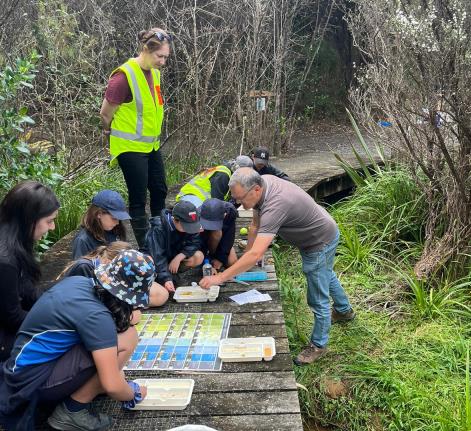
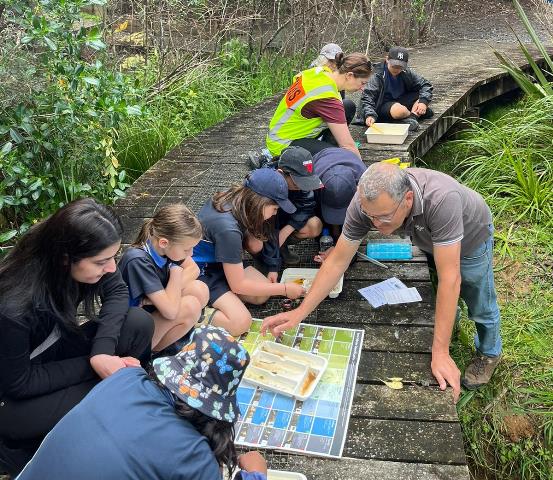
Everyone was happy to see a baby banded kokopu in addition to the macroinvertebrates and the students got a chance to study it.

Nature Walk
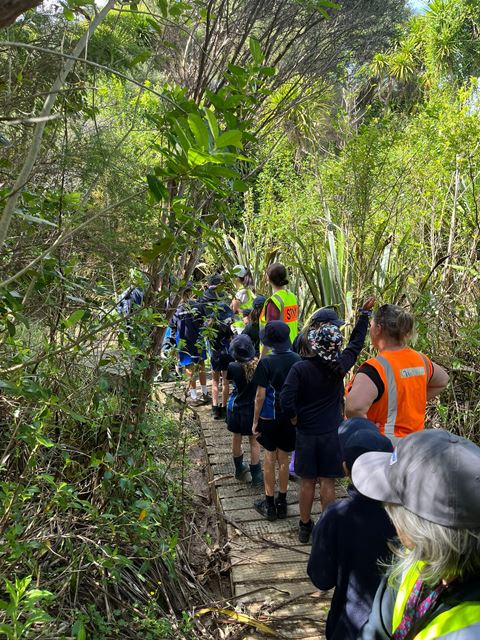
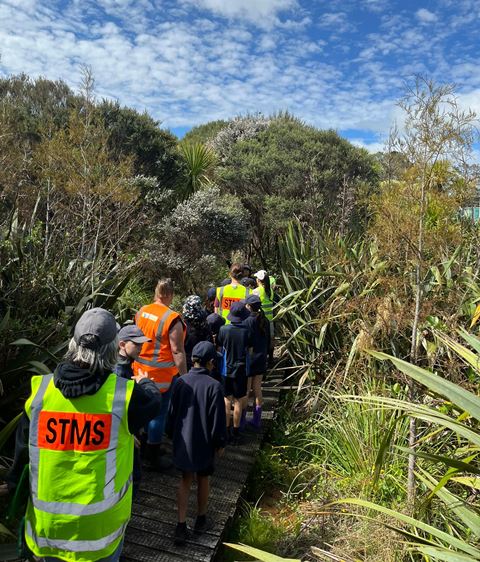
Shanthie and Thomas took each group for a walk in the bush.
During the walk, Thomas pointed out some of the different planting areas to show the students how the CUE Haven forest was establishing.
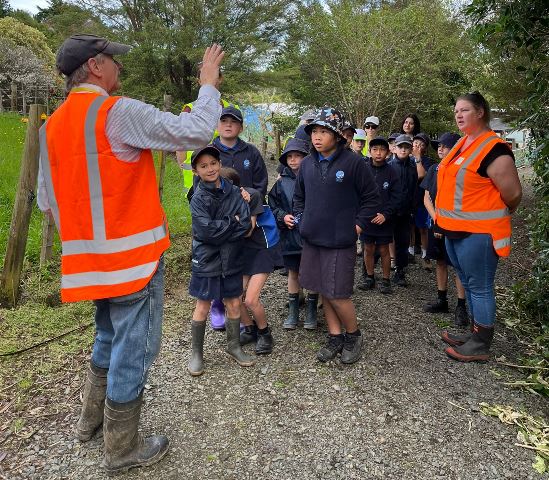
As we continued our walk through the bush, the students got a chance to see many different native trees.

They also saw the area where there had been a slip in 2016 that re-occurred during the January storm this year. The slip had started on the neighbouring property and Thomas explained what had happened in 2016 and how the CUE Haven plantings had been effective in limiting the impact of the slip in 2023 and the value provided by trees on hillslopes.
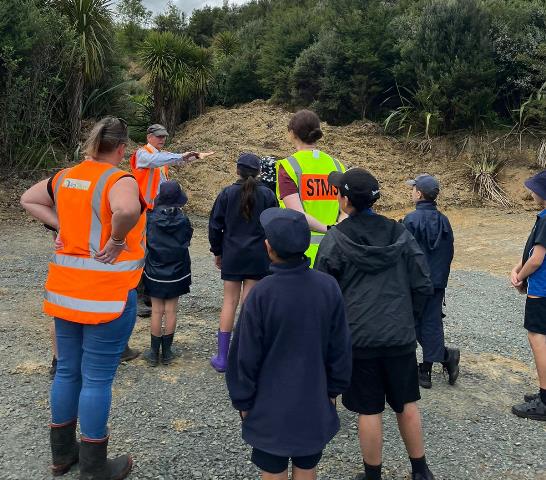
We carried on to Wahi Mohiotanga where the students would do their nature study and learn about pest control.
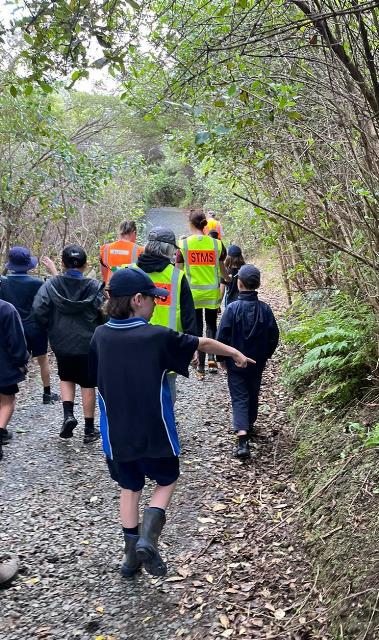
Once on site, Shanthie gave a short explanation on how to observe and study nature.
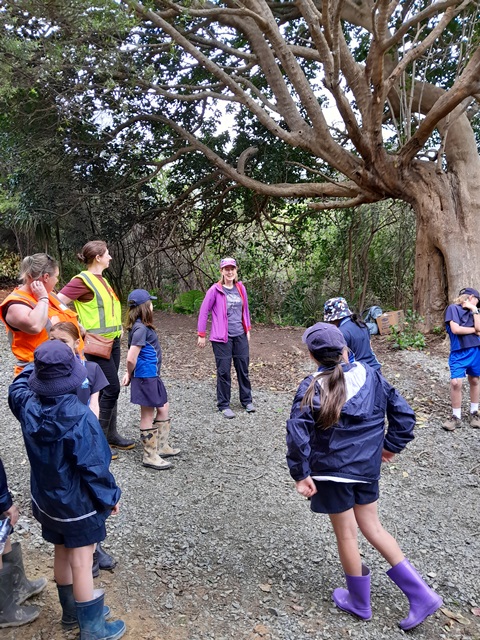
The students got a good look at the kereru, piwakawaka and tuis that were visiting the big puriri tree.
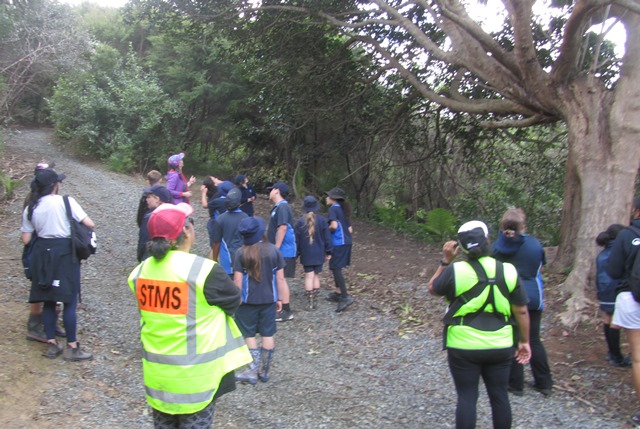


Shanthie gave each student a magnifying glass and explained that they were to explore the area and find interesting nature objects for a closer look.
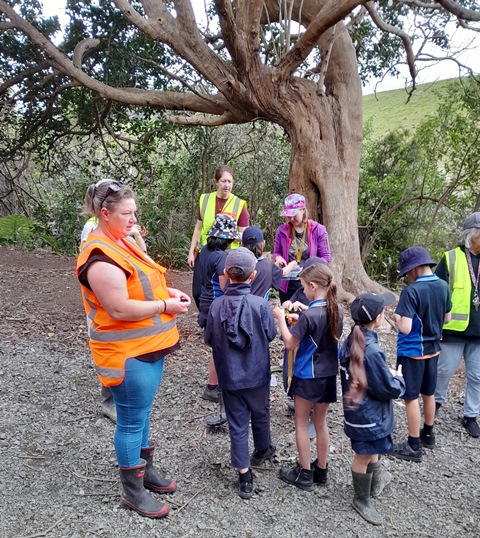
The students found many interesting things to study, from flowers to rocks and leaves.


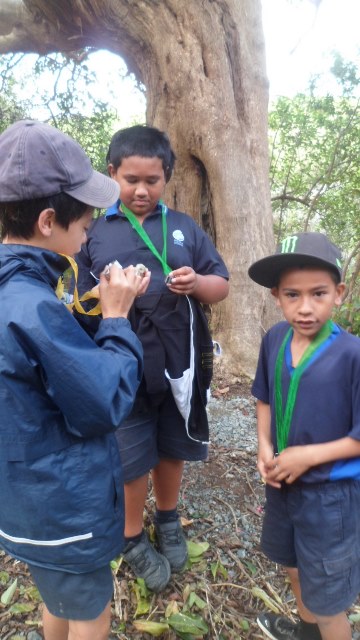
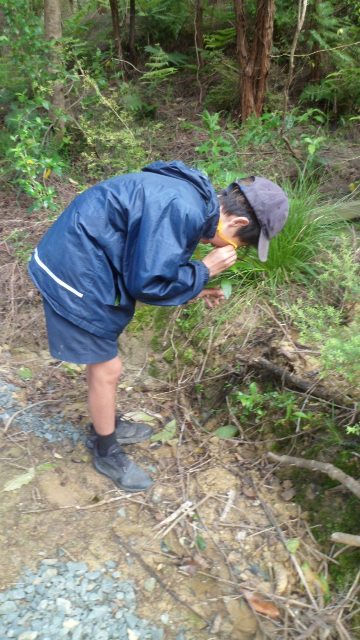

At the end of the exercise, Shanthie brought the group together to share ideas on what they had seen.
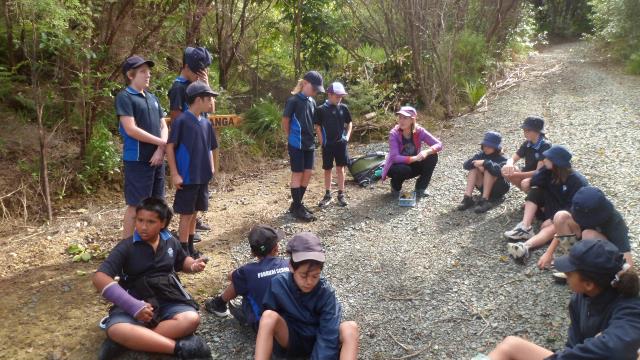
One student found a possum skull, which was a nice lead in to the discussion Thomas gave about pest control.
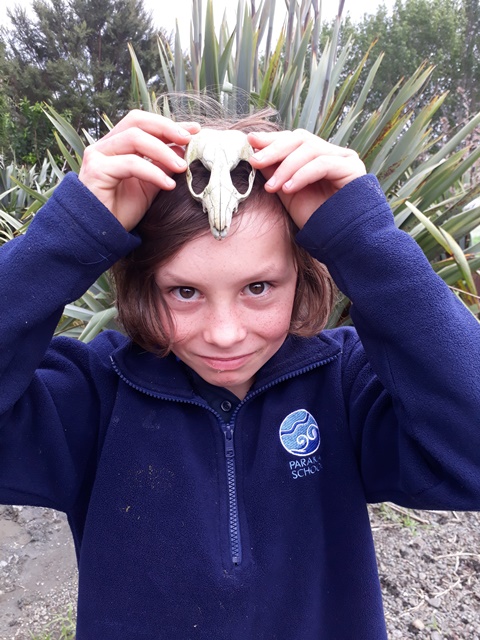
Thomas explained the different introduced pests that threaten native New Zealand plants and animals and described pest control activities at CUE Haven.

He explained how tracking tunnels are used to determine the types of pests present and showed the students some cards with footprints of different animals.
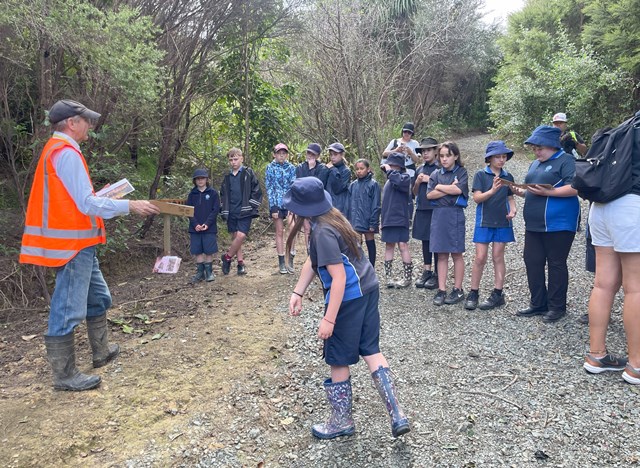
Thomas also showed the students the different types of traps used at CUE Haven and explained how they work.
Shanthie finished the session by giving each student a card with a picture of a plant or animal. Students were asked to interact with each other and discuss how the animals or plants on their cards are inter-related. This exercise gave students an opportunity to learn more about how everything in nature is connected.
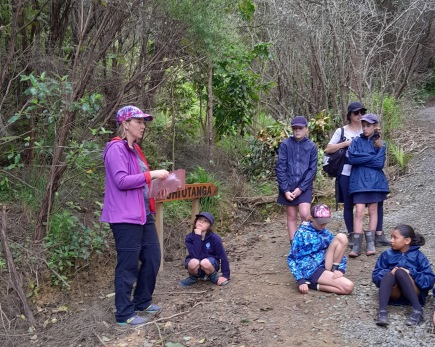
At the end of the session, Thomas took the group back to the cottage for the next activity. The walk gave the students a chance to see more of the CUE Haven bush.
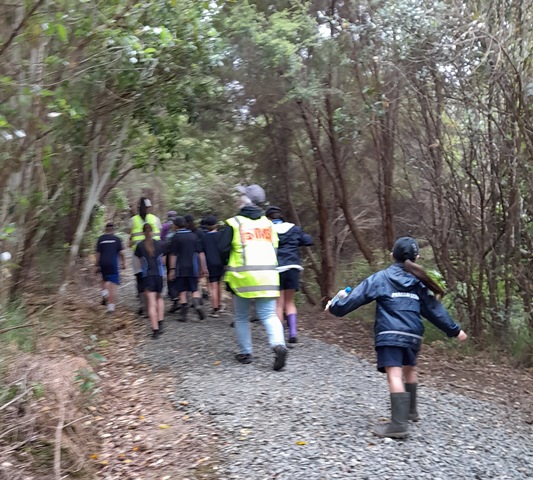
They were able to look out over the Araparera River and Kaipara Harbour to better understand the connection between the CUE Haven waterways and the harbour and how improving water quality at CUE Haven is helping the harbour.
Sustainable Living
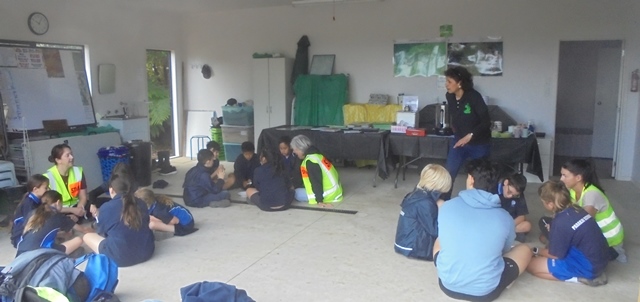
Mahrukh led the students in an interesting activity about resource depletion to help the students better appreciate how to conserve our planet’s resources.
The students broke into smaller groups with each group including at least one adult. Each group had a bowl full of small stones and an empty bowl, a pair of chopsticks, a fork, a teaspoon and a tablespoon. The students were told that they were to take turns moving the stones from one bowl to the other, the first person was to use only the tips of their little fingers, the second person would use chopsticks, the third person, the teaspoon, the next person would use the fork, the fifth the tablespoon and the last person could scoop up stones with their whole hand.
Mahrukh counted time as the students worked on moving the stones.
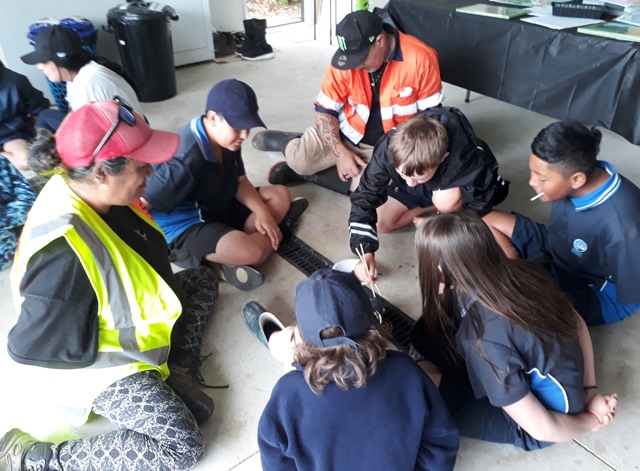
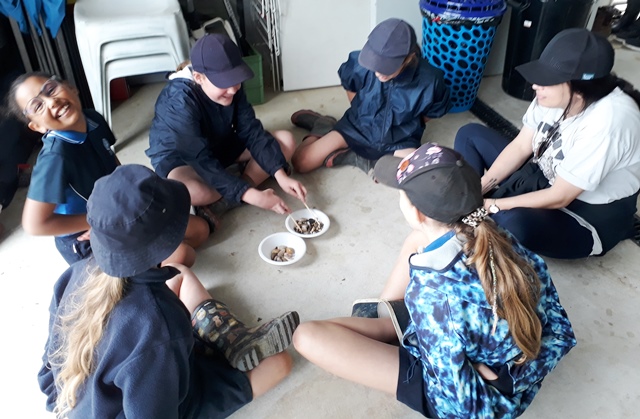
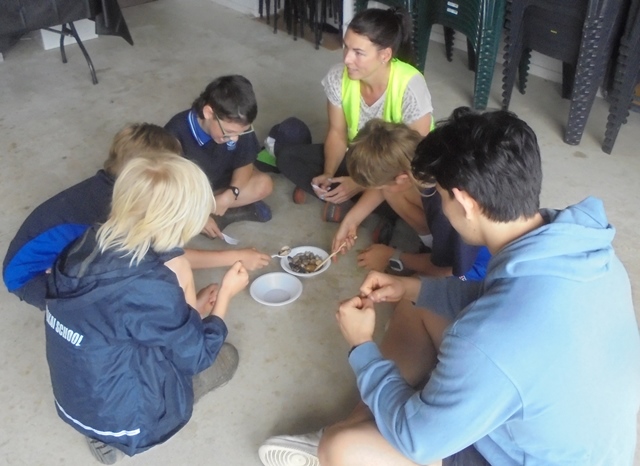


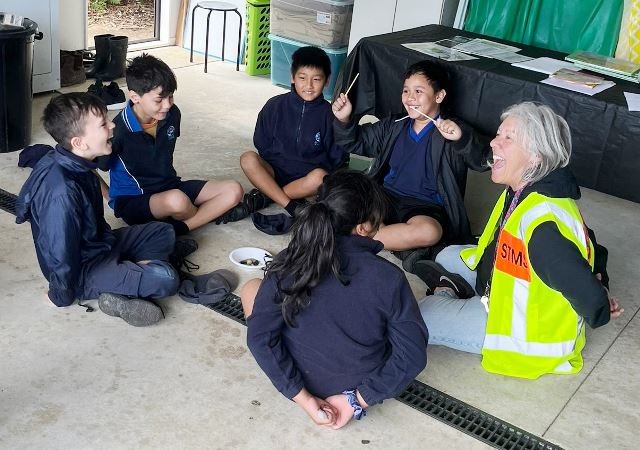

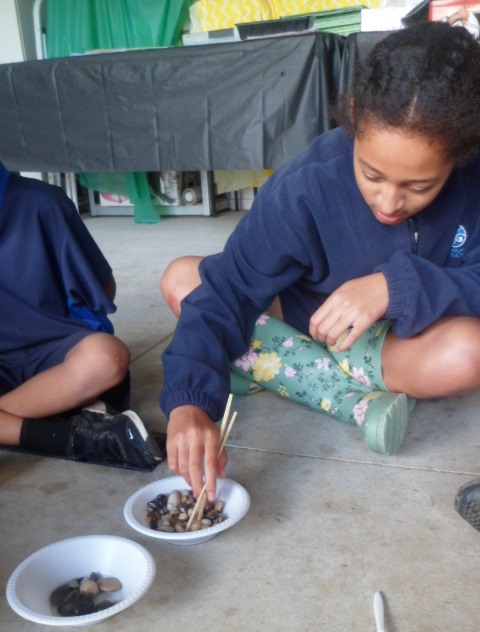
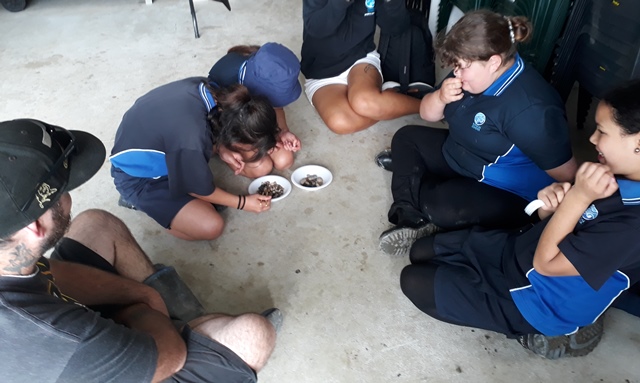
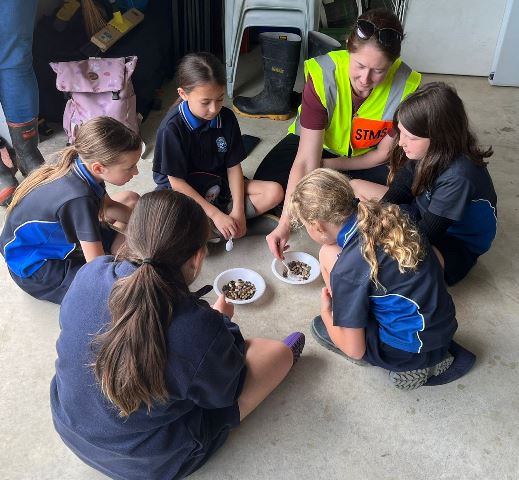
The groups finished up moving their stones and the last person in each group had no stones to remove because the others had worked hard to move the stones as quickly as they could.
Mahrukh asked the students who didn’t get a chance to move any stones to say how they felt. That generated some interesting talk about being considerate and including everyone in activities.
Mahrukh then asked the students to imagine that the stones represented the Earth’s natural resources and the chopsticks, forks and spoons represented the technical progress that has enabled humans to use resources more rapidly over the ages. She discussed how excessive use of all our natural resources would mean that there could be none left for future generations.
Although at first the students thought the activity was a game and the objective was to empty the bowls as quickly as possible, they realized the importance of what the stones represented and the risk to future generations of over consumption.
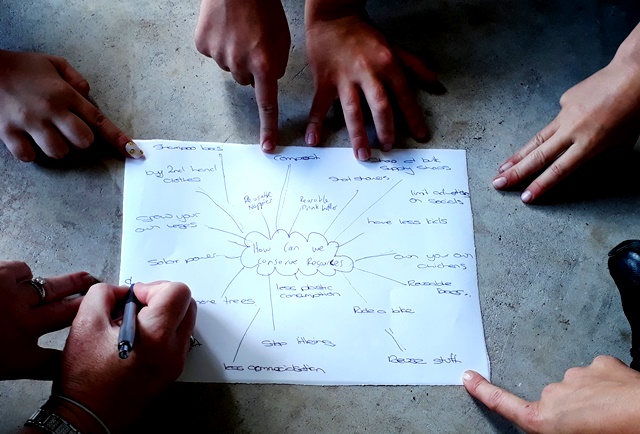
The adults in each group then led the students in a discussion about what they could do individually to reduce consumption, conserve resources and care for each other and our planet.
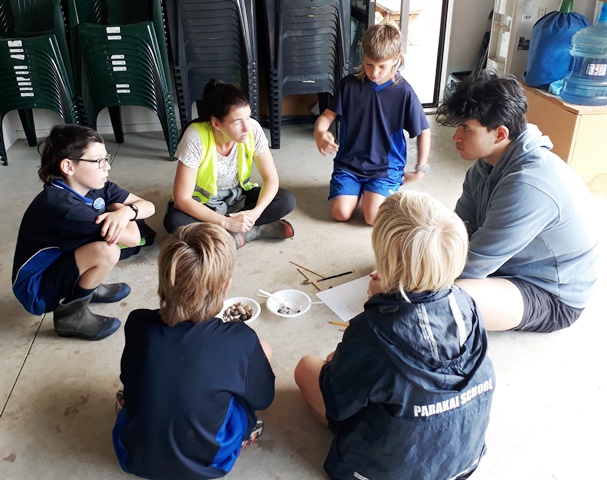

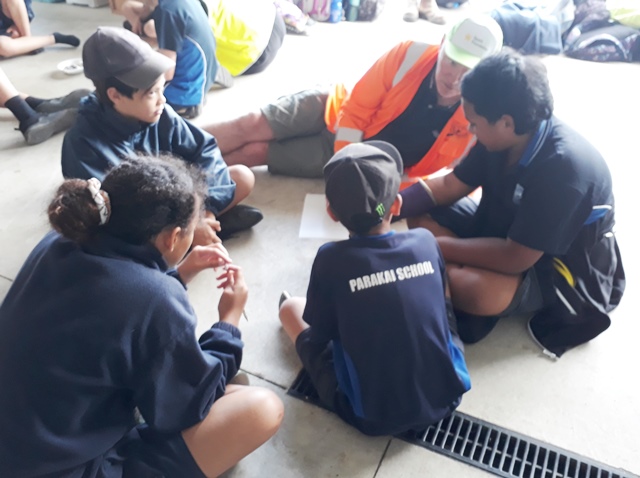
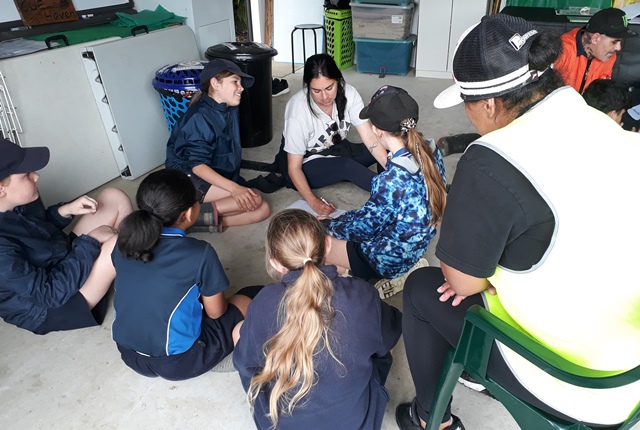
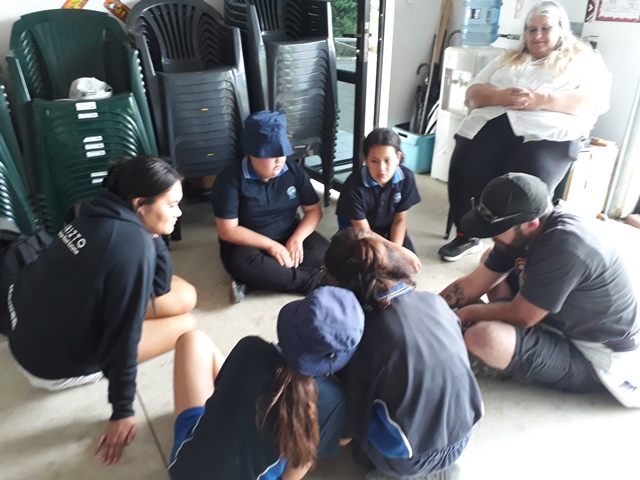
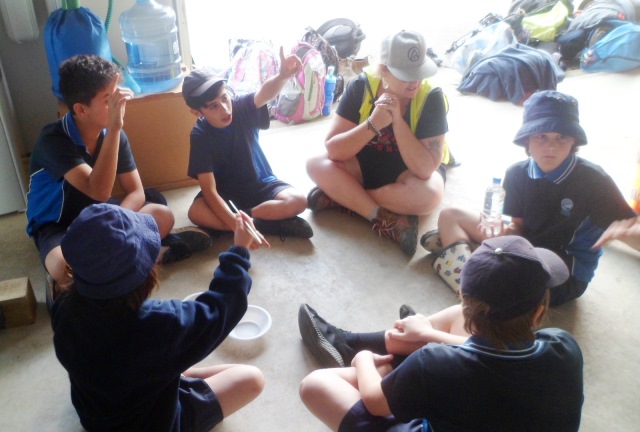
The students all had some excellent ideas. Each group recorded their ideas so that they can develop them further in school and at home.
It was a great day of learning and exploring. At the end of the day all of the groups reassembled for a quick wrap up. Before the group left, Mahrukh explained the “marshmallow experiment,” and the importance of developing self control and patience, and sent off each student with a candy bar and encouragement to not eat it until they got back to school.
A Huge THANK YOU to Deloitte for their Good Thinking initiative and the cadet team who developed and drove the idea of an educational day for Parakai School—it would not have been possible without you. And many thanks to Simran and Tiger for joining the Parakai School students in their activities today.
And a big thank you to Chris and Shanthie for all of their preparation work and inspiring teachings in the field.
Also many thanks to teacher Sue and all the accompanying parents and teachers for helping out today and helping to make the day so very special.
And last but not least – THANK YOU to the students! We were impressed at how polite, enthusiastic and engaged the students were and we hope you all had a fun and educational field visit. We look forward to having you out with your family and friends to explore more of CUE Haven – your community reserve.


 CUE Haven
One response to “Parakai School–2 November 2023”
[…] The team’s proposal was selected by a panel of judges and Parakai School in northwest Auckland was selected to have a unique environmental education day at CUE Haven. On 2nd November, year 5-6 students from Parakai school came out to CUE Haven and learned about sustainable living, water quality testing and native fish and macroinvertebrates, native NZ birds, trees and pest control to protect native habitats. You can read about their visit here. https://cuehaven.com/2023/12/08/parakai-school-2-november-2023-2/ […]