
Today we were very happy to welcome Year 7 & 8 students from Kaukapakapa School. The school is only 12 km from CUE Haven and is the closest school to CUE Haven.
Because of the size of the group, we held a morning and afternoon session.
The plan for each group was for the students to do a variety of activities which would help them learn about nature and how they can help protect it. The program was developed by teacher Angelique in cooperation with environmental educator Shanthie Walker and Whitebait Connection representatives Hana and Kate. Shanthie, Hana and Kate were all on site today. Also joining us was our dear friend, Joy, who is a keen environmentalist.
The students would conduct tests on water from the CUE Haven stream and observe waterborne macroinvertebrates, do a nature walk to observe the bush and birds and to learn about the importance of pest control and participate in a sustainability exercise.
Because of the size of the morning group, we broke the group into two. One group did the nature walk while the other did the water testing activities and we switched over so that all the students had a chance to do all of the activities. The entire group came together for the sustainability activity.
The first group of students, teachers, accompanying parents arrived at nine, and the second group arrived at noon. Shanthie and Mahrukh welcomed each group and gave them a safety briefing and an explanation of the plan for the day.
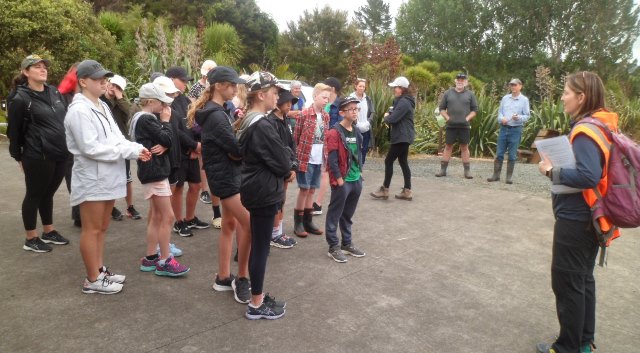
Nature Walk
Shanthie, Thomas and Joy led the students on a walk through the CUE Haven bush.
On the walk, Thomas showed the students the neighbour’s paddock to give the students an idea of how CUE Haven looked fifteen years ago before the restoration work started, and then showed them the 2008 and 2015 plantings so that they could compare the way the trees had grown up.
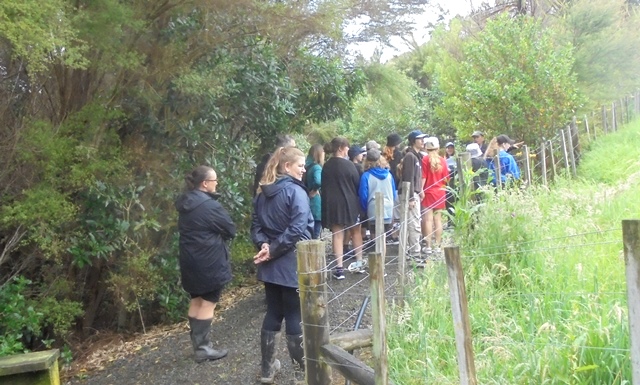
The students had a chance to see the area where a landslip occurred during a torrential rain storm in August 2016 and which re-occurred during the 2023 Auckland Anniversary rain storm. The slip began on the neighbouring property but mainly affected CUE Haven. Thomas explained some of the causes of slips and talked about the importance of having trees on hill slopes and showed the groups the remedial planting being done in the area to stabilize the hill slope.
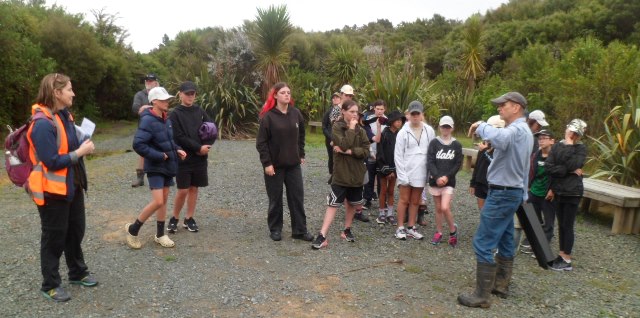
As we continued our walk through the bush, the students got a chance to see many different native trees.

The group then headed down to a big puriri tree for their nature activities.
Shanthie explained the first activity and gave small groups of students cards with different plants and animals along with a magnifying glass. She instructed the groups to search the area to see how many of the items on their cards they could find.

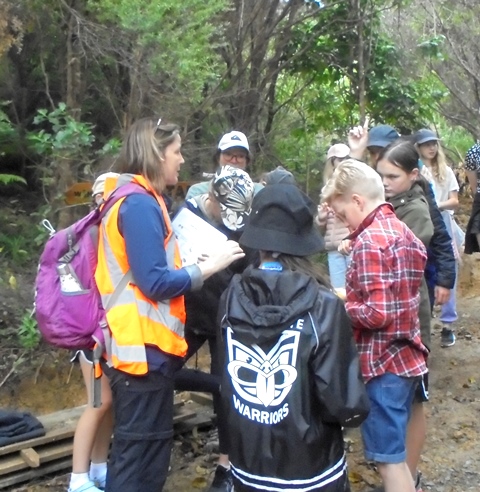
The students took a few minutes to look around the area and found many interesting things.
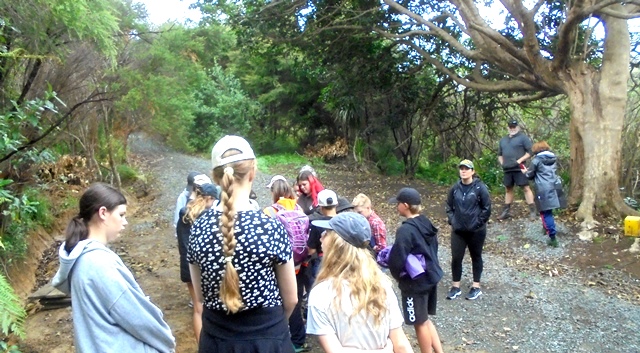
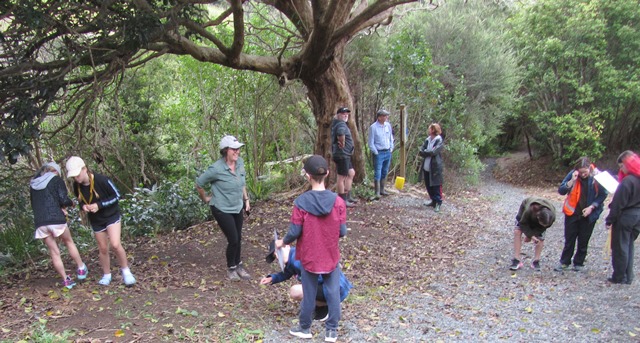

Joy found one of the most interesting and unusual items—the exoskeleton of a Puriri moth. We had gathered under a big puriri tree and these moths spend most of their lives as larvae inside the tree. The adults emerge in November each year and live for one day. During that day they mate and lay eggs around the tree. When the eggs hatch, the larvae burrow into the tree where whey live for seven years.
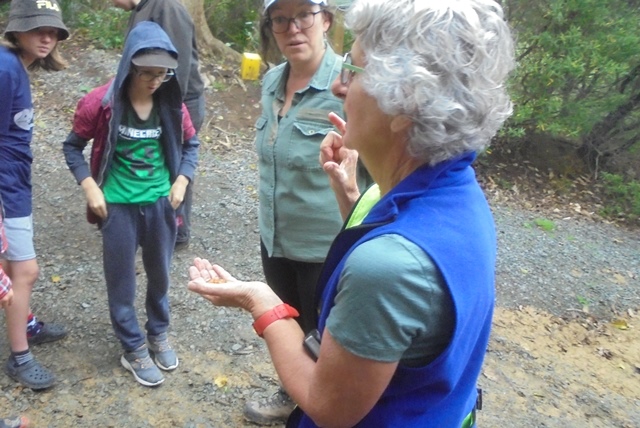
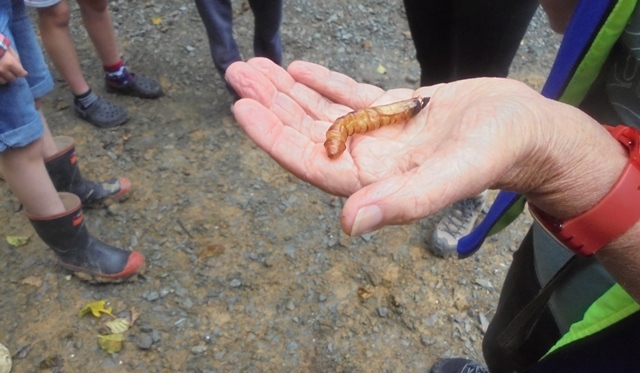
Joy explained the life cycle and behaviour of the moths, which are bright green and have a wingspan of 15 centimeters.
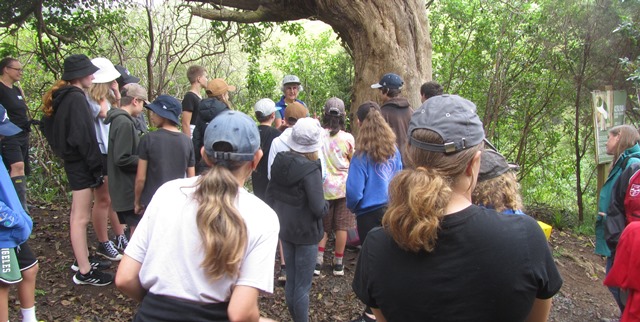
Shantie brought the students back together to talk about what they had found on their search in the bush.
Thomas then gave a short talk about the importance of pest control. He explained our pest control efforts and showed the students how we use tracking tunnels and baits and traps.
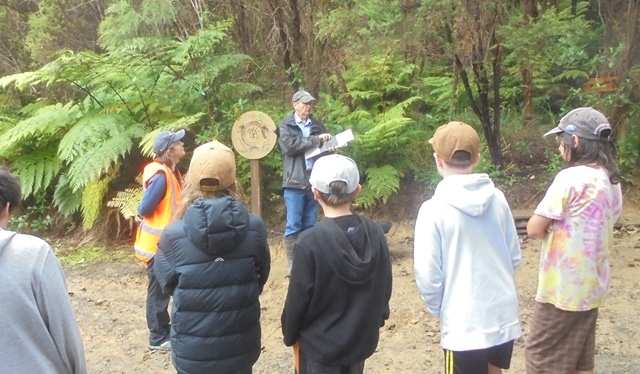
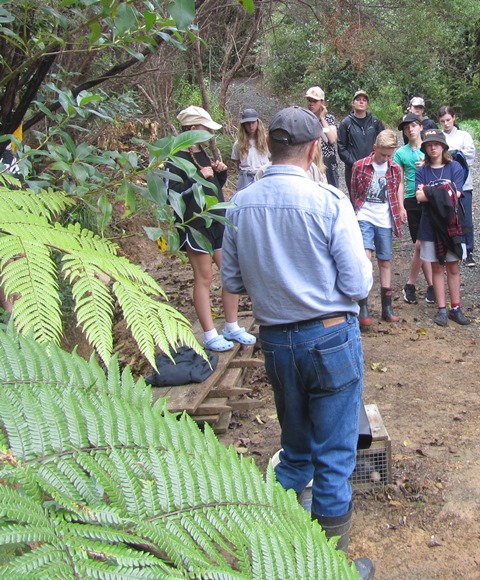
Thomas explained that the puriri tree we were standing under had been saved from possum browsing. He showed the students pictures of the tree before we started doing pest control so they could see how much damage the possums had done and a picture taken a few years later so they could see how the tree had recovered.
He then had them look at the tree and the area around it to see how much more things have changed.
That tree has become a home for the native NZ pigeon, kereru, (and puriri moths!) and a lot of nikau and taraire growing up under the tree after the kereru and other birds have dropped seeds.
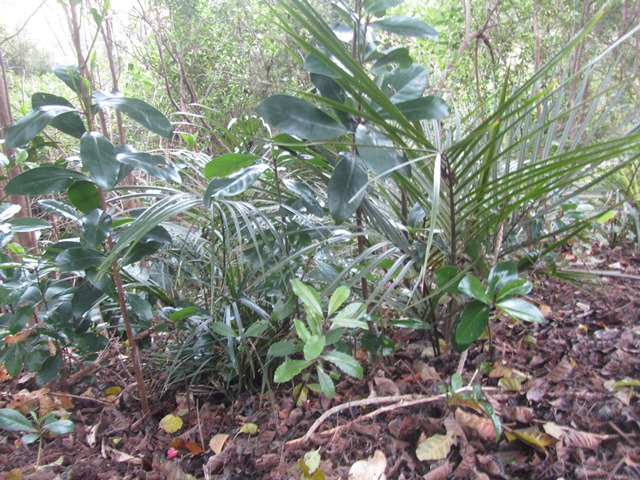
This gave the students a chance to see how everything in nature is interconnected—our pest control efforts saved the puriri tree, which attracted birds, in particular the kereru, who are in turn are creating more forest by spreading seeds.
On the way back, the students also got a chance to look out over the Araparera River and Kaipara Harbour and they could observe the connection between the CUE Haven waterways and the harbour and better appreciate how improving water quality at CUE Haven was helping the harbour.
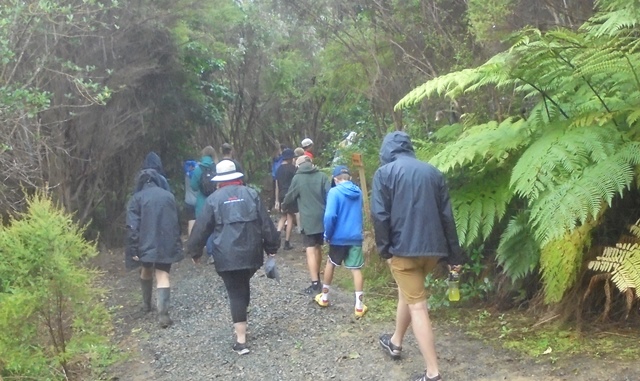
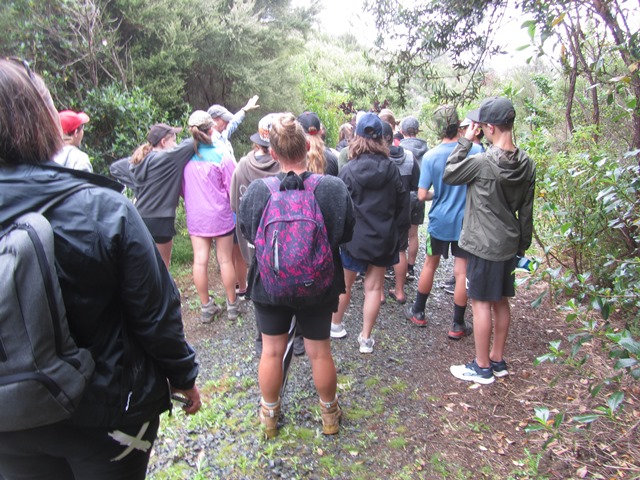
We finished up with a walk through the wetlands and then headed back to the nursery for the next activity.
Waicare
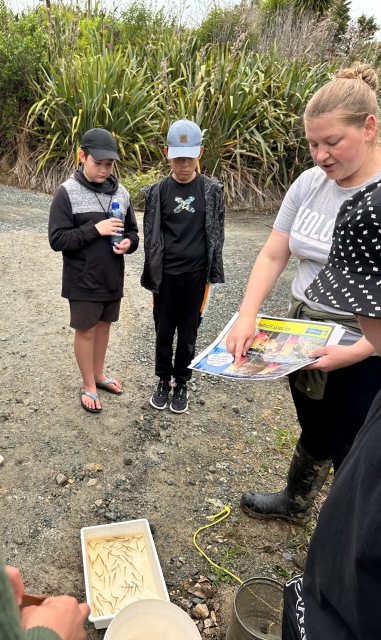
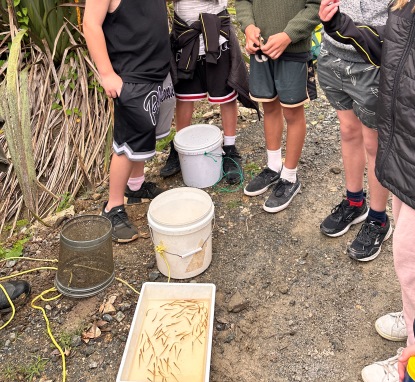
Hana and Kate from Whitebait Connection had arrived early and collected water samples for testing and study. They also put some nets in the stream to see if they could collect any fish.
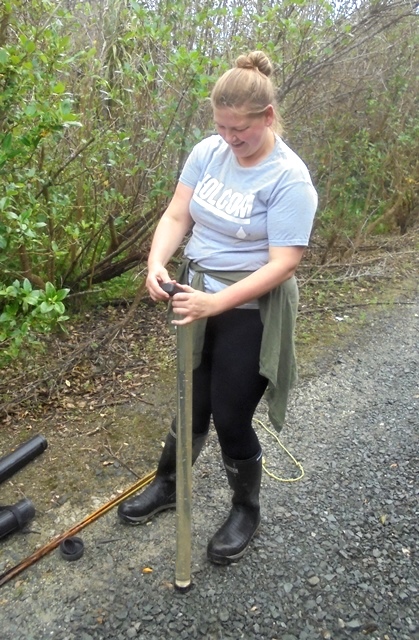
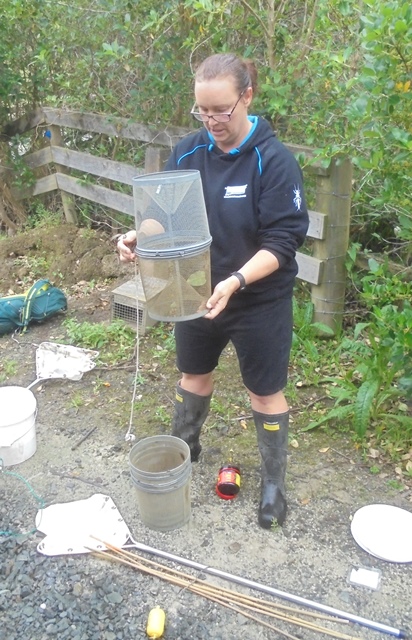

They set up testing and study stations for the students in the nursery.
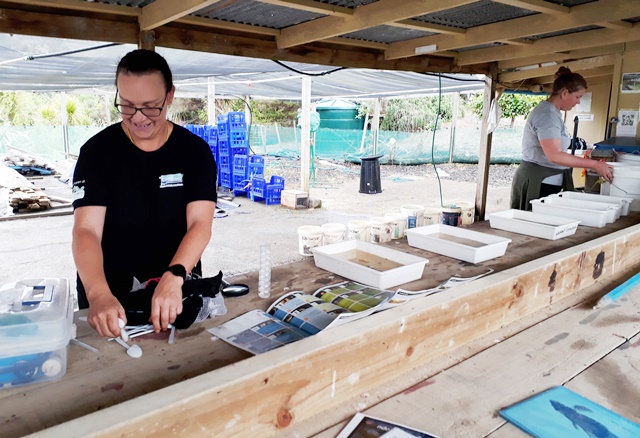
They started the sessions with a short talk about water quality issues and explained the tests the students would be doing. Kate explained that the students would be testing water quality for clarity, temperature, oxygen, pH and phosphates, nitrites and nitrates.
Kate demonstrated how the tests were performed and the students helped to interpret and record the results.
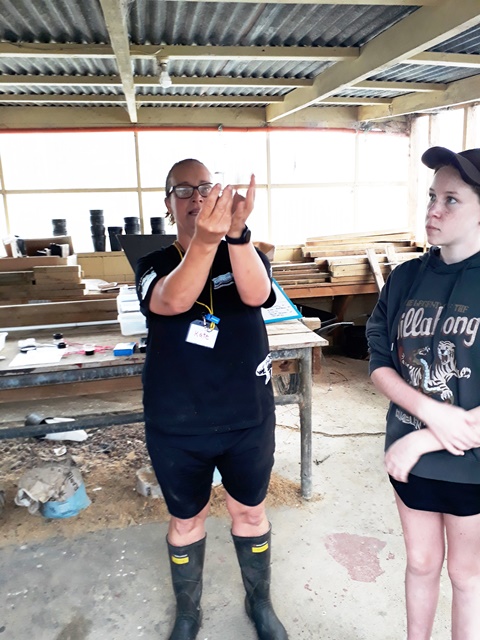
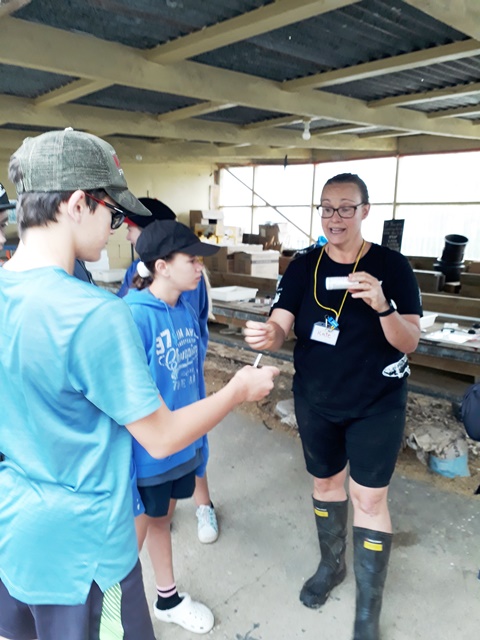
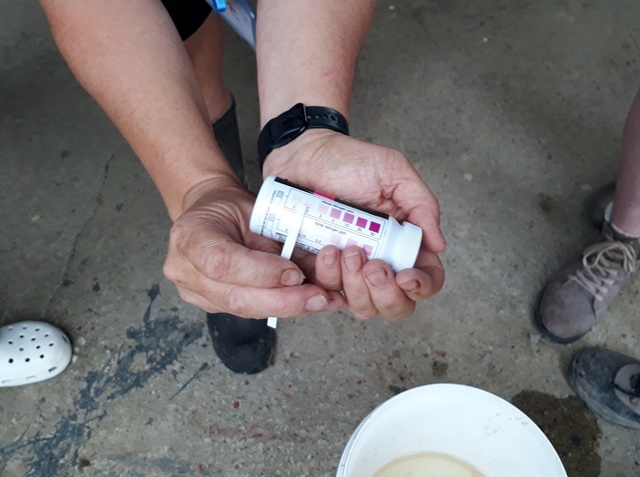

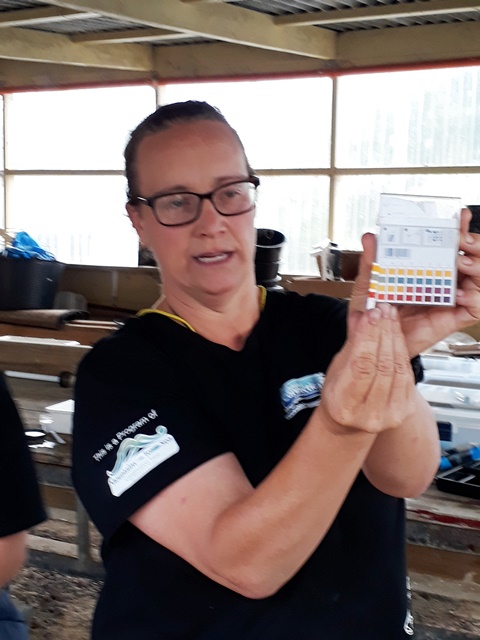
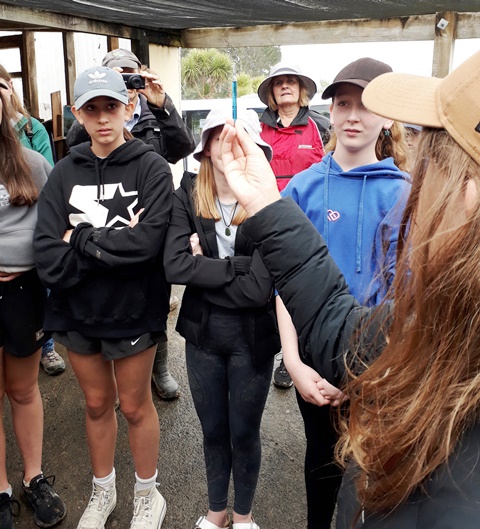
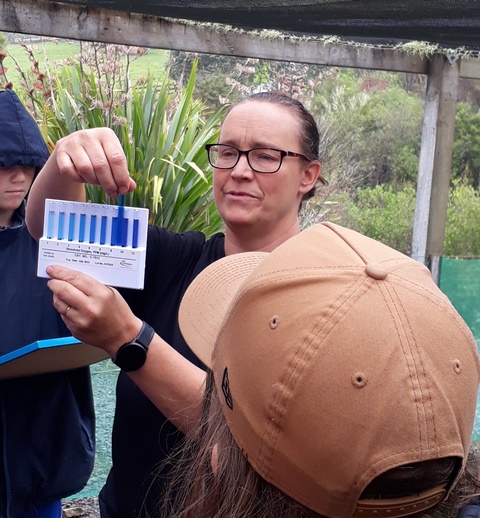
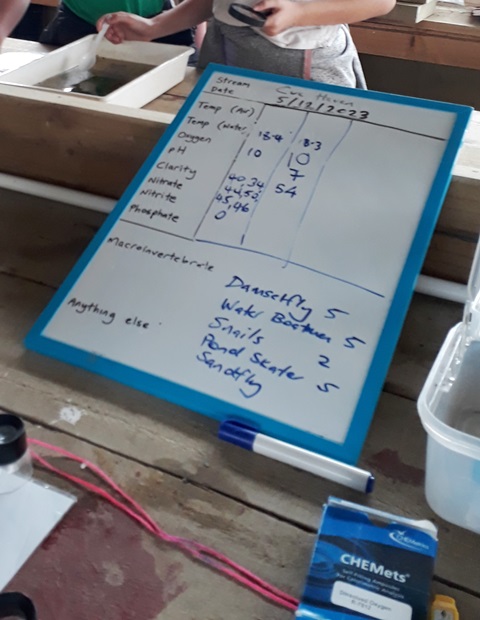
We were very happy with the results of today’s testing of the water in the CUE Haven stream. The oxygen level was very high, the ph neutral, and there were no significant levels of nitrites, nitrates or phosphates.
The next activity was to learn about water clarity and macroinvertebrates—the tiny creatures that live in fresh water ponds and streams. Hana and Kate explained how water quality affected aquatic creatures and how to test water clarity to assess silt levels and also how to identify macroinvertebrates. The amount and diversity of animal life is an indicator of the health of the waterway.
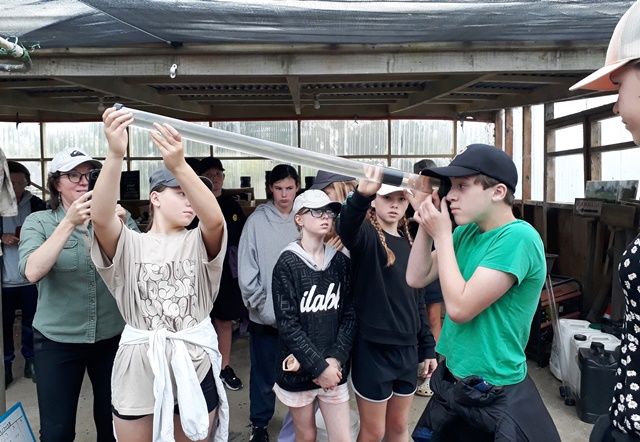
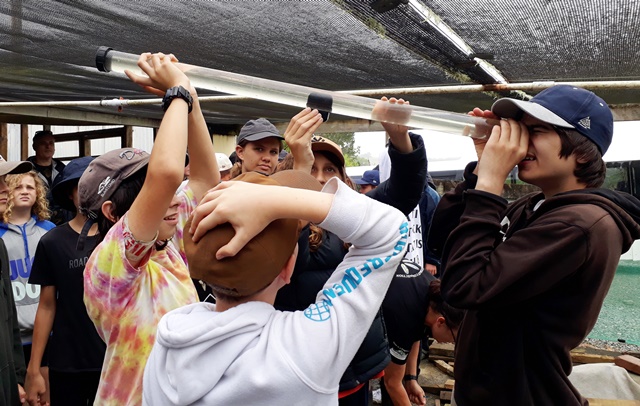
Water clarity testing involved looking through a tube filled with water and measuring the distance light can penetrate to see how much silt and other material is suspended in the water. Many aquatic creatures cannot thrive in cloudy water.
Kate explained and demonstrated how the test works and the students teamed up to conduct several tests and the results of the individual tests were averaged.

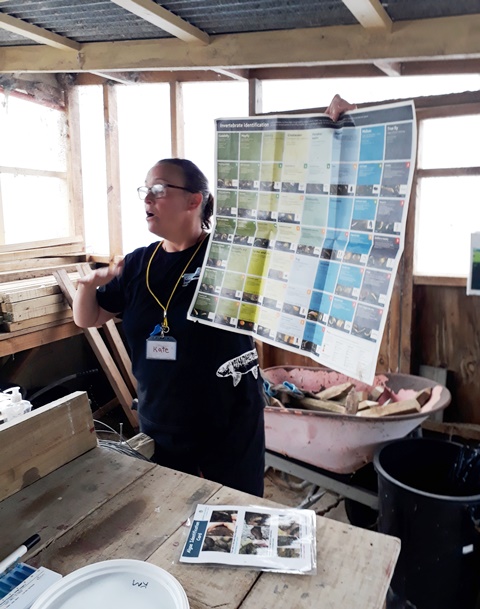
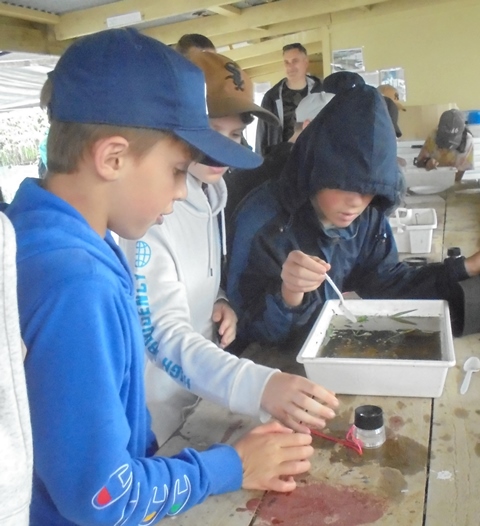
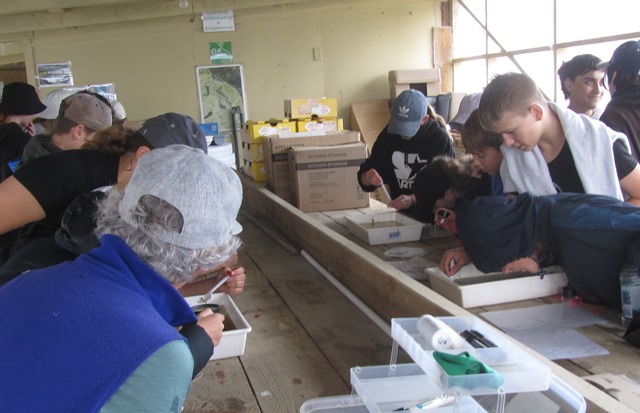
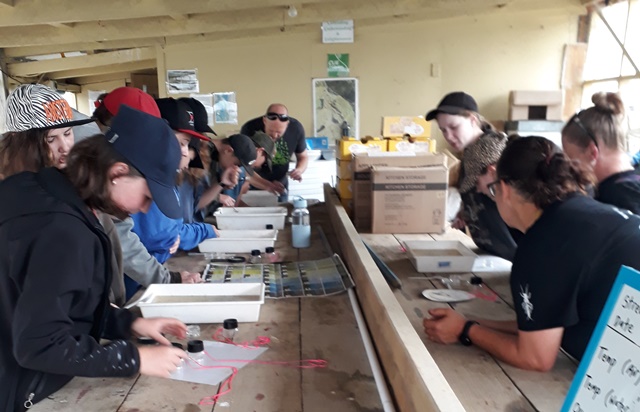
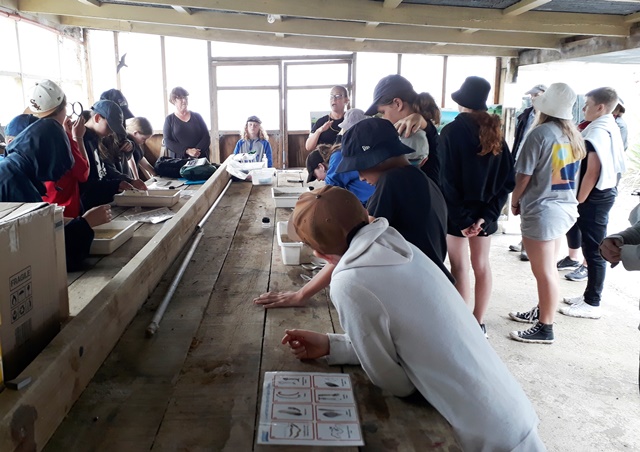
The last test involved studying a sample of water and leaf litter from the bottom of the stream to identify the macroinvertebrates. Kate showed the students some resources that would help them with the identification process.
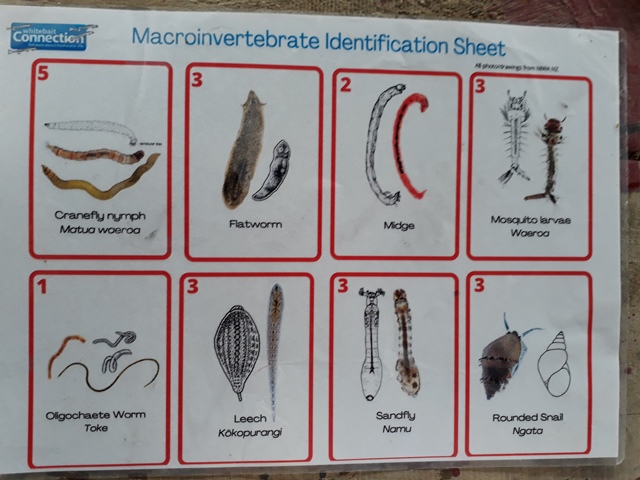
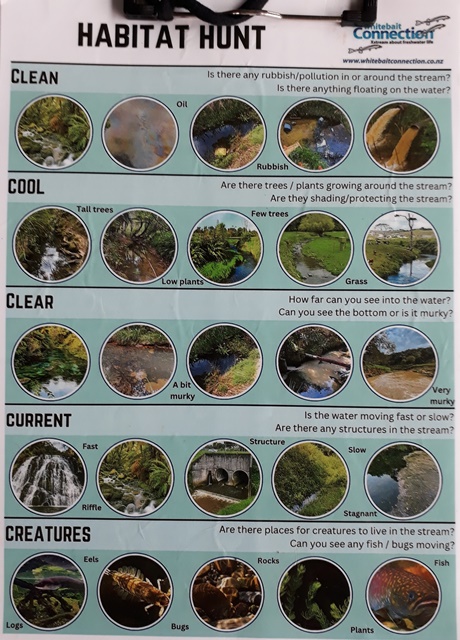
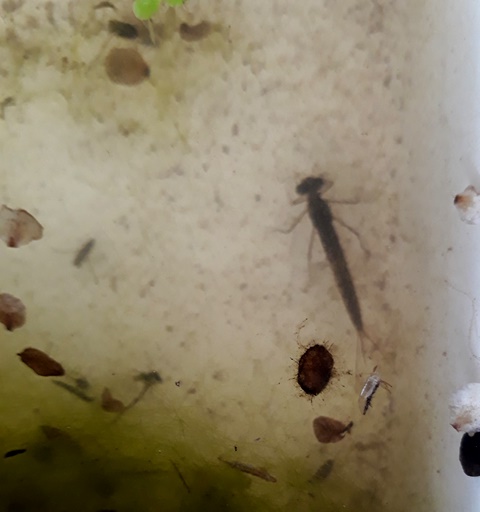
The students used magnifying glasses to identify as many creatures as they could and found a variety of macroinvertebrates including damselfly nymphs, stonefly, rounded snail and water boatmen. We were happy to see that some of the creatures the students found are sensitive to water quality and are not found in polluted streams.


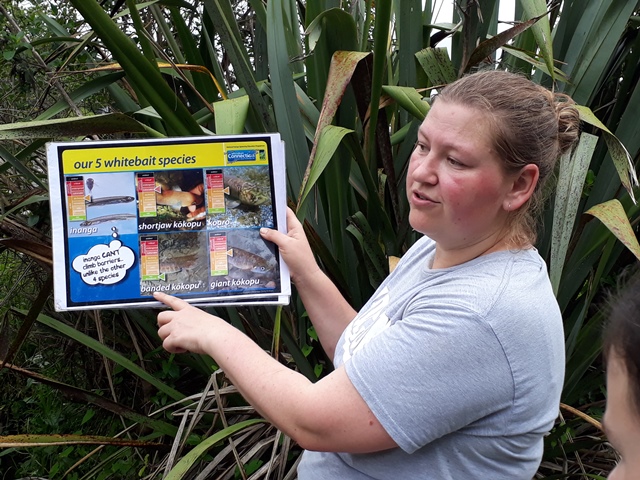
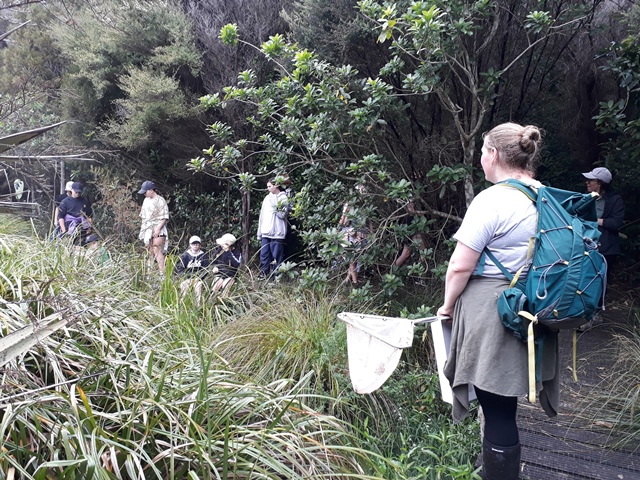
Hana and Kate finished up the waicare session by taking the students on a short walk to the CUE Haven stream where they had put the nets and to get a better understanding of wetlands. One group got to see inanga and a juvenile banded kokopu that was caught in one of the nets.

Sustainable Living and Kaitiakitanga
The students also did an interesting activity with Mahrukh about resource depletion to help them better appreciate how to conserve our planet’s resources and be good kaitiaki (guardians) of our planet. The activity generated a lot of interesting discussion.
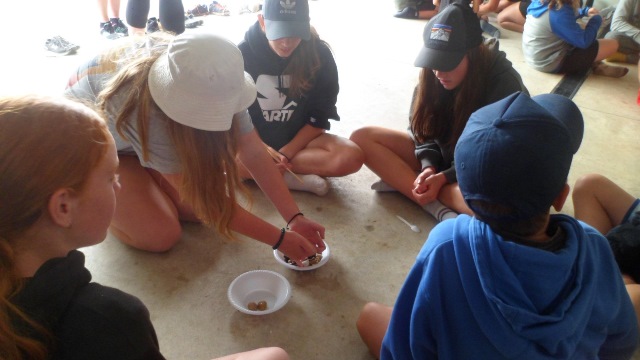
The students broke into groups of six or seven and each group was assisted by a parent or teacher. Each group had a bowl full of small stones and an empty bowl, a pair of chopsticks, a fork, a teaspoon and a tablespoon. The students were told that they were to take turns moving the stones from one bowl to the other, the first person was to use only their little fingers, the second the chopsticks, the third the teaspoon, the fourth the fork, the fifth person the tablespoon and the remaining could scoop up stones with their whole hand.
Mahrukh counted time as the students took turn moving the stones using their “tool.”
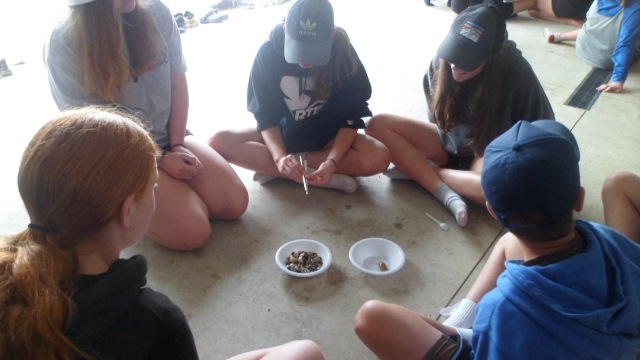
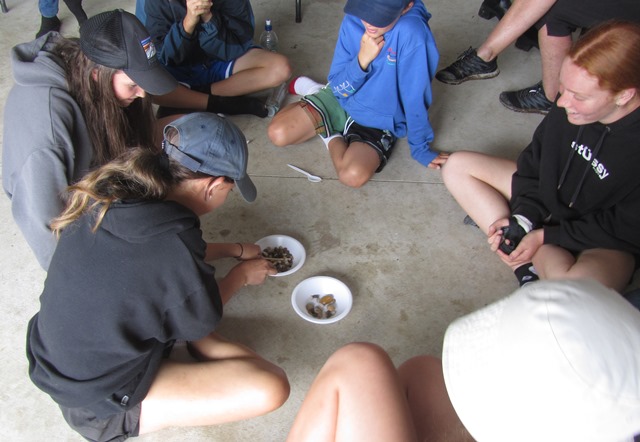
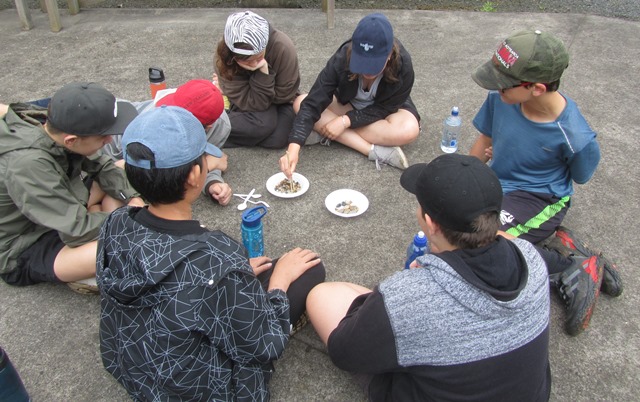
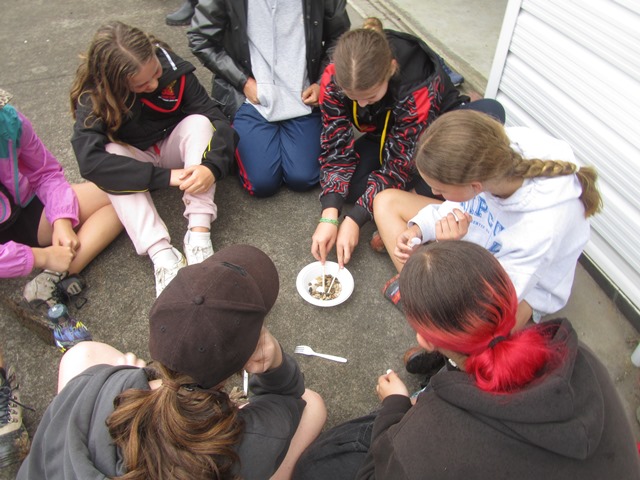

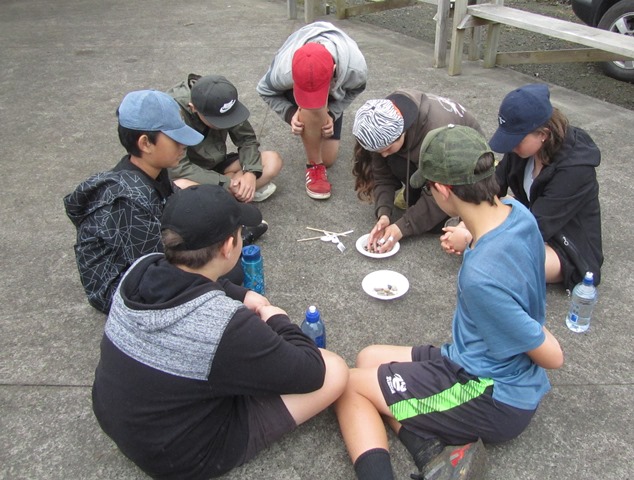
After the students had emptied the bowl, Mahrukh then the students to imagine that the stones represented the Earth’s natural resources and their little fingers, chop sticks, forks and spoons represented the technical progress that has enabled humans to use resources more rapidly over the ages. And then discussed how excessive use of all our natural resources would mean that there could be none left for future generations.
The students then spent some time in their groups discussing different ways to conserve resources – by Rethinking, Reducing, Reusing, Restoring, Repairing and Recycling. They discussed ideas for things they can do at school and home while the adults facilitated the discussions.
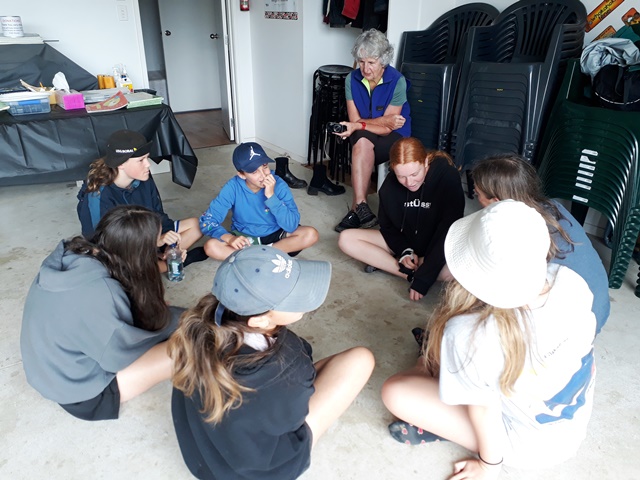


Although at first the students thought the activity was a game and the objective was to empty the stones from the bowl as quickly as possible, they realized the importance of what the stones represented and the risk to future generations of over consumption and what they could do individually and as a society to reduce consumption and conserve resources.
We really enjoyed spending time with the Kaukapakapa School students, teachers and parents and we want to thank Angelique for making all the arrangements for the visit. And a big thank you the teachers and parents for helping out.
A special thank you to Joy for taking the time to join us and adding a lot of value with her insights about native NZ plants and animals.
And a big thank you to Hana, Kate and Shanthie for coming out and adding their expertise to the sessions.
And most of all, a BIG thank you to the students! We really enjoyed meeting you and hope you enjoyed your visit and cultivated a bit more understanding about nature and our place in this universe.
We hope you will come back to CUE Haven with your families to explore more of CUE Haven -your community native forest reserve.
 CUE Haven
2 responses to “Kaukapakapa School–5 December 2023”
THank you to all those that made this amazing learning day happen
Wow – th